The nature of 2D panel exhibitions lends itself to creativity, and when hosts maximise their potential, their impact can be particularly extensive. Based in Mumbai, India, the organisation Get Set Learn wanted to explore bringing a travelling exhibition of this type of flexible format to their audiences. They chose Dinosaurs Among Us, a recent panel show created by the American Museum of Natural History (AMNH), as their first experience for its wide appeal and adaptability. In this conversation, the team reveals how they used the travelling exhibition as a resource for informal education, localising the experience to connect with a large audience of learners.
TEO: How would you present Get Set Learn, and your role in education in India?
Shubhra Rishi: Get Set Learn is an education organisation dedicated to making learning more relevant, future-ready, and engaging for students across India. We work at the intersection of education, innovation, and real-world skill-building, designing programmes, platforms, and partnerships that prepare young learners not just for exams but for life.
Our teams focus on developing essential 21st-century skills across artificial intelligence, robotics, sustainability, entrepreneurship, and life skills through curriculum-aligned programmes, educator development, national learning challenges, and immersive exhibitions. Our partnerships with global institutions bring world-class learning to classrooms and communities across India.
What made you select Dinosaurs Among Us as your first hosted travelling exhibition?
Shubhra Rishi: We launched our first travelling exhibition, Dinosaurs Among Us in partnership with the American Museum of Natural History (AMNH), to bring a world-class science exhibition to students in India. Partnering with the American Museum of Natural History gave us access to outstanding scientific research and a globally trusted brand, which helped build credibility and excitement around the exhibition.
We were looking for an exhibit which could truly resonate with young learners. An experience which did more than present facts. It needed to shift perception. This 2D panel exhibition explores the unexpected connection between the mighty dinosaurs who roamed our planet long ago and the modern animals we coexist with today: birds. Its creative design was shaped with that shift in mind: to help the young generation relate to the story of evolution and see dinosaurs in a new light. Its modular and flexible design allowed us to adapt the show for Indian audiences while keeping it affordable and accessible, ensuring a wide range of learners could engage with science-rich storytelling.
Localisation is not just about language; it’s about creating relevance.
Talking about flexibility, could you tell us about the adaptations you carried out to meet your local audiences’ needs?
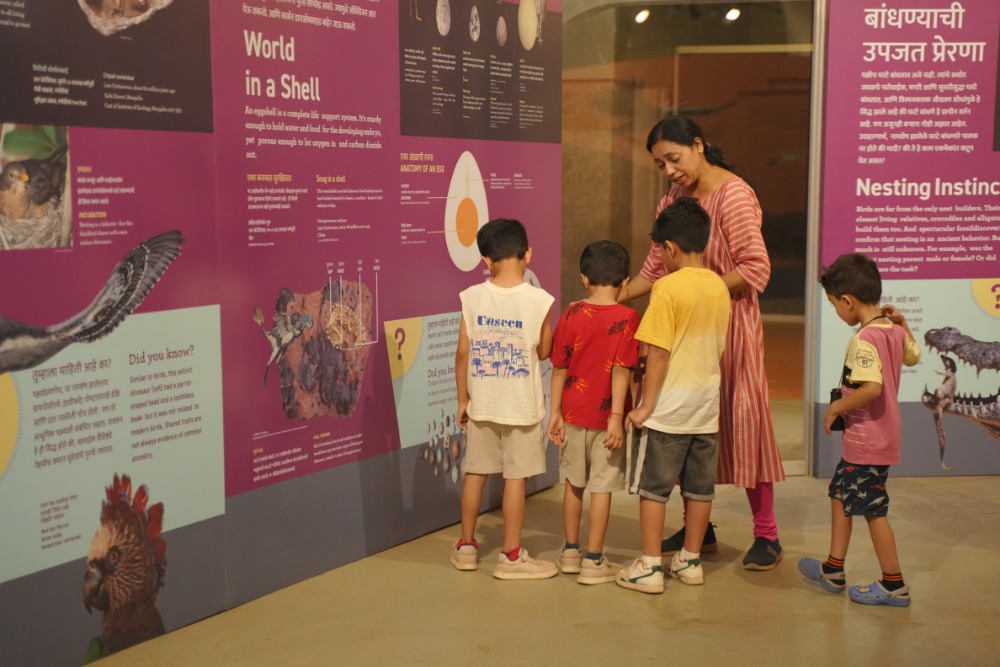
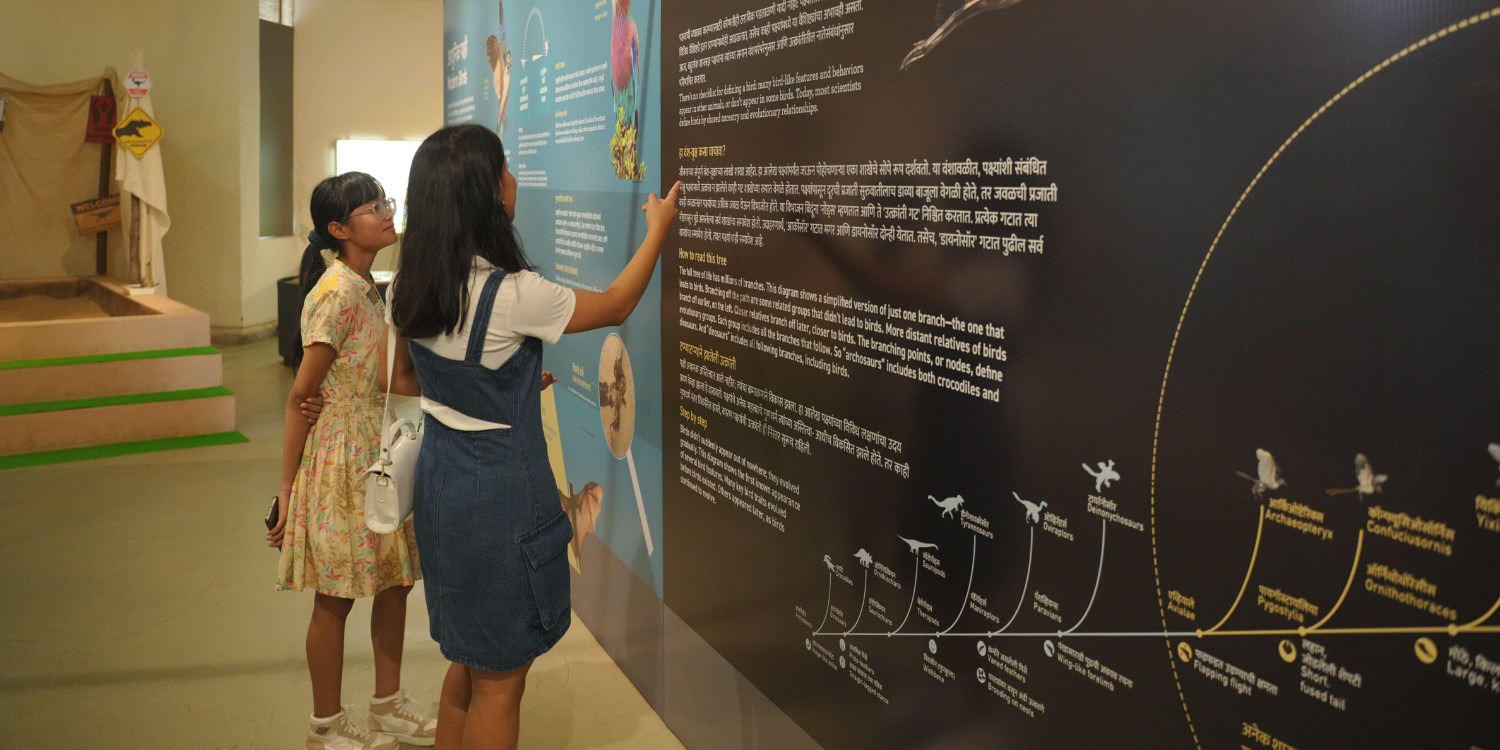
Reema Jaiswal: To make the exhibition truly resonate with audiences in India, we introduced Marathi translations alongside English, enabling deeper regional engagement. We also created special guided tour in three regional languages, Hindi, English and Marathi, making the experience widely accessible.
But localisation is not just about language; it’s about creating relevance. To make the exhibit resonate with Indian audiences, we also included real fossils from the Narmada Valley, dating back from the Late Cretaceous period, such as sauropod femur bones, titanosaur eggs, ammonites, and shark teeth and brought Indian palaeontology into the spotlight. We combined the science research provided by the museum with familiar imagery, multi-sensory interactions, and local storytelling, to make the complex evolutionary journey feel both accessible and unforgettable.
What were the multi-sensory experiences you integrated in the exhibition?
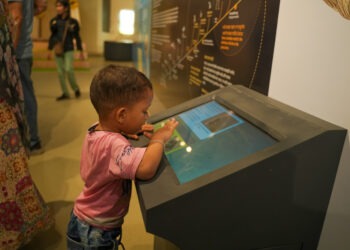
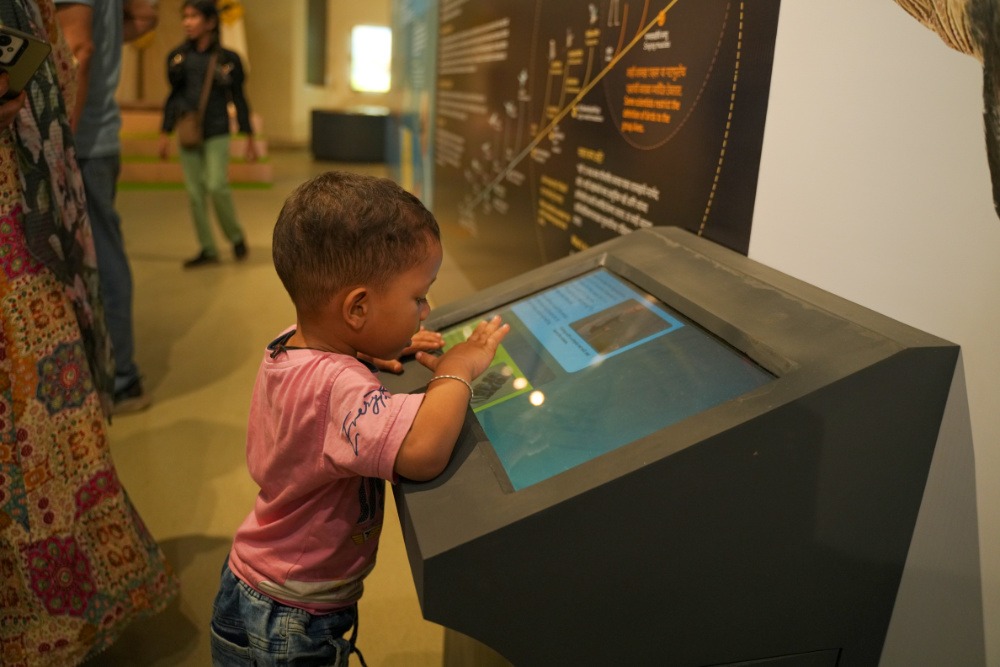
Reema Jaiswal: Our team designed and added multi-sensory, hands-on components that allowed learners to do more than just look and listen. These included:
- Paleontologist Prep: Visitors got suited up like real scientists.
- Real Fossils Display: Real fossils from India offered a rare, tangible insight.
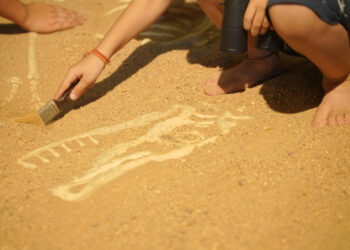
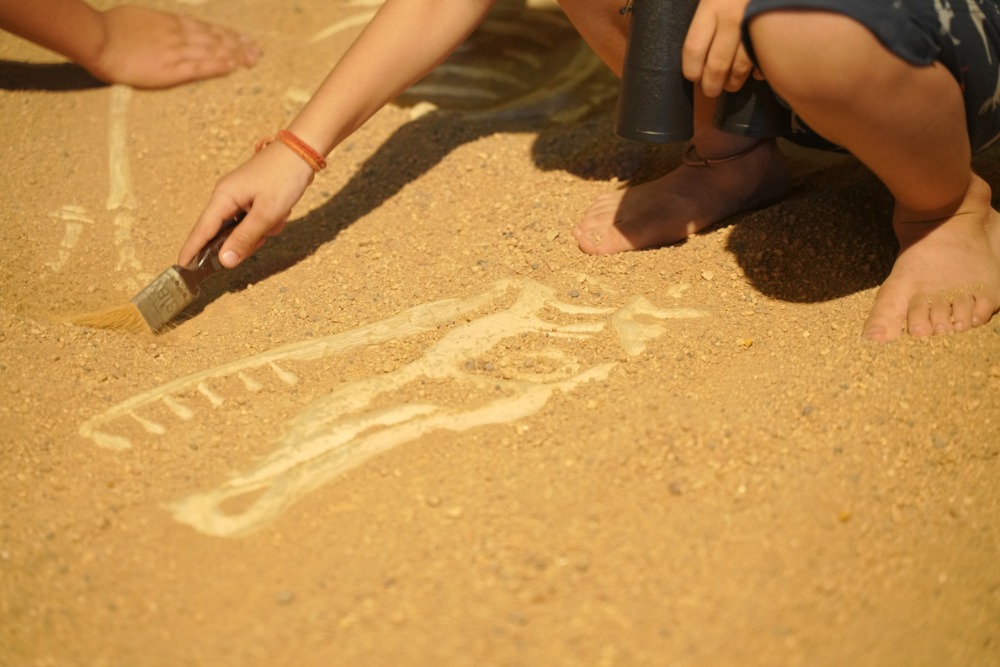
- Excavation Sandpit: Children uncovered a Velociraptor fossil and solved a T-Rex puzzle, bringing discovery and problem-solving together.
- 3D Life-Size Yutyrannus Encounter: A towering, feathered dinosaur model sparked awe and questions about flight evolution.
- Velociraptor Puppet Interaction: Brought science to life with movement, storytelling, and humour.
- Take-Home Adventures:
- Dino Hunt Worksheet: A scavenger-style activity featuring 20 dinosaurs promoted exploration and retention.
- Dino Treasure Hunt: The Dino Treasure Hunt was a quiz-style activity designed to turn curiosity into critical thinking.
- Dino Stamping Station: A creative zone where learners stamped their own Yutyrannus emblems, fun, tactile, and memorable.
Fossil Crafting & Souvenirs: Visitors created fossil impressions to take home, a keepsake of their learning journey.
Our success depends on listening closely to our audience. We continuously collect feedback from visitors, educators, and parents to understand what excites and challenges them.
Was the exhibition an opportunity also for localised educational programming?
Reema Jaiswal: Yes, we organised special events, which marked international days with contextual, science-linked celebrations, such as:
- Earth Day: Nature walks, cyanotype art, eco-bookmarks, and themed tours.
- International Museum Day: “Ask a Paleontologist” live Q&A with Dr. Harsha Dhiman, and a Dinosaur Philately Exhibition.
- World Environment Day: Nature bingo, birdwatching, home gardening, seed ball making, nest making session, puppet show and a 100-sapling plantation drive.
These activities transformed scientific concepts into tangible experiences, making learning active and memorable for learners across all age groups.
What are your key success factors for exhibitions and related activities? How is data important to select your projects, as an organisation specialised in Education Technology?
Shubhra Rishi: Our success depends on listening closely to our audience. We continuously collect feedback from visitors, educators, and parents to understand what excites and challenges them. Our qualitative and quantitative data-driven approach helps us refine our programmes and select projects that truly meet learners’ needs.
For Dinosaurs Among Us , we tracked tangible metrics of the exhibit’s audience. For example in Mumbai, we identified that at the MuSo, our 3000 visitors were largely niche, curious urban families. Whereas at the Nehru Science Centre, the panel exhibition drew an approximate 18300 visitors from a wide demographic, including government and private school groups, regional communities, and senior citizens, and we reached 4M+ on social media with the Awareness Campaign.
This mix of quantitative impact and qualitative insight allowed us to balance educational depth with broad-based reach. We also partnered with parenting and education influencers to authentically amplify our message on social media, ensuring we met learners where they are. The touring exhibition helped facilitate our reach to these audiences.
We will continue pioneering learning that inspires curiosity, creativity, collaboration, and lifelong engagement, and travelling exhibitions founded upon world class science will be a core resource for the development of this strategy.
You have opened a second location, partnering with Nehru Science Center, after the experience with MuSo. Could you tell us more about how these approaches complemented each other?
Reema Jaiswal: At MuSo, we showcased the exhibit to a passionate, niche audience. Nehru Science Center is India’s largest interactive science centre, which is owned and operated by the National Council of Science Museums (NCSM), which functions under the Ministry of Culture, Government of India. With their support and reach, we were able to showcase this exhibit to a broader and more diverse audience, including school groups and regional communities across all age groups.
Partnering with both organisations enabled us to serve different learner segments and community types, creating a complementary model that balances exclusivity and mass accessibility. This dual approach prepares us to replicate and scale our exhibitions across India.
What are your plans after this first experience with a touring exhibition?
Shubhra Rishi: The success of Dinosaurs Among Us has opened doors to expand into more cities and venues. Our core belief is that active, experiential learning is essential. It is not a side project, but central to developing new and future skills that expand learners’ minds to new ideas and opportunities. We will continue pioneering learning that inspires curiosity, creativity, collaboration, and lifelong engagement, and travelling exhibitions founded upon world class science will be a core resource for the development of this strategy.
Exhibition mentioned
Dinosaurs Among Us, by the American Museum of Natural History (AMNH)
About the authors & contributors
Teo
Teo is the global resource for the international touring exhibitions community. Created for hosts, producers and suppliers of international touring exhibitions, Teo is a global living resource for sharing best practices and fostering new international collaborations in the world of travelling exhibits.
Get Set Learn
With over 100 years of legacy, Arvind Mafatlal Group has served the school ecosystem for decades. To take this association to a new level with the purpose of strengthening the future of learning and employability in India, the group forayed into the education sector in 2020. Get Set Learn was born with the vision to transform education in India and shape a new generation of learners.