The Muséum national d'Histoire naturelle share their insights on creating a science touring exhibition to reach remote audiences, with the POP'UPS of Natural History exhibition.
How can a touring exhibition help diversify an organisation’s audiences?
As a major player in scientific culture, the Muséum national d’Histoire naturelle (MNHN) has been offering travelling exhibitions in France and across the globe for several years. These exhibitions of various formats explore a wide range of topics, and aim to promote scientific knowledge and research to a broad audience worldwide.
Four years ago, the Travelling Exhibitions team decided to develop a new project on natural history in order to respond to the constant demand for this universal subject and to reach new audiences. The aim was to come up with a new, attractive and accessible format that would reach audiences living in areas distant from science museums. This new format would bring natural history directly to communities, reaching audiences in their own living and learning environments. It would create a special event, even in smaller towns, fostering exchange and providing an opportunity to discover a scientific subject that is accessible to all. As a national institution, the MNHN would use this tool to redistribute knowledge across a wider geographical area.
Designed as an educational tool for all, the exhibition has also been presented in companies to raise awareness among professionals and employees.
To achieve this, we collaborated with the scientific culture association Ombelliscience, a regional association in the Hauts-de-France (France) offering their professional expertise in their geographical area. This partnership was essential to reach the targeted new audiences, since only an established and recognised partner could know the audiences and potential venues of the area well enough, as well as their constraints and specific characteristics. As a network player, the association acts as a relay for dissemination throughout the region. Conversely, this partnership allows Ombelliscience to offer a new service, gives visibility to the organisation, and allows it to carry out its primary mission of disseminating scientific culture in a new way.
Audience diversification
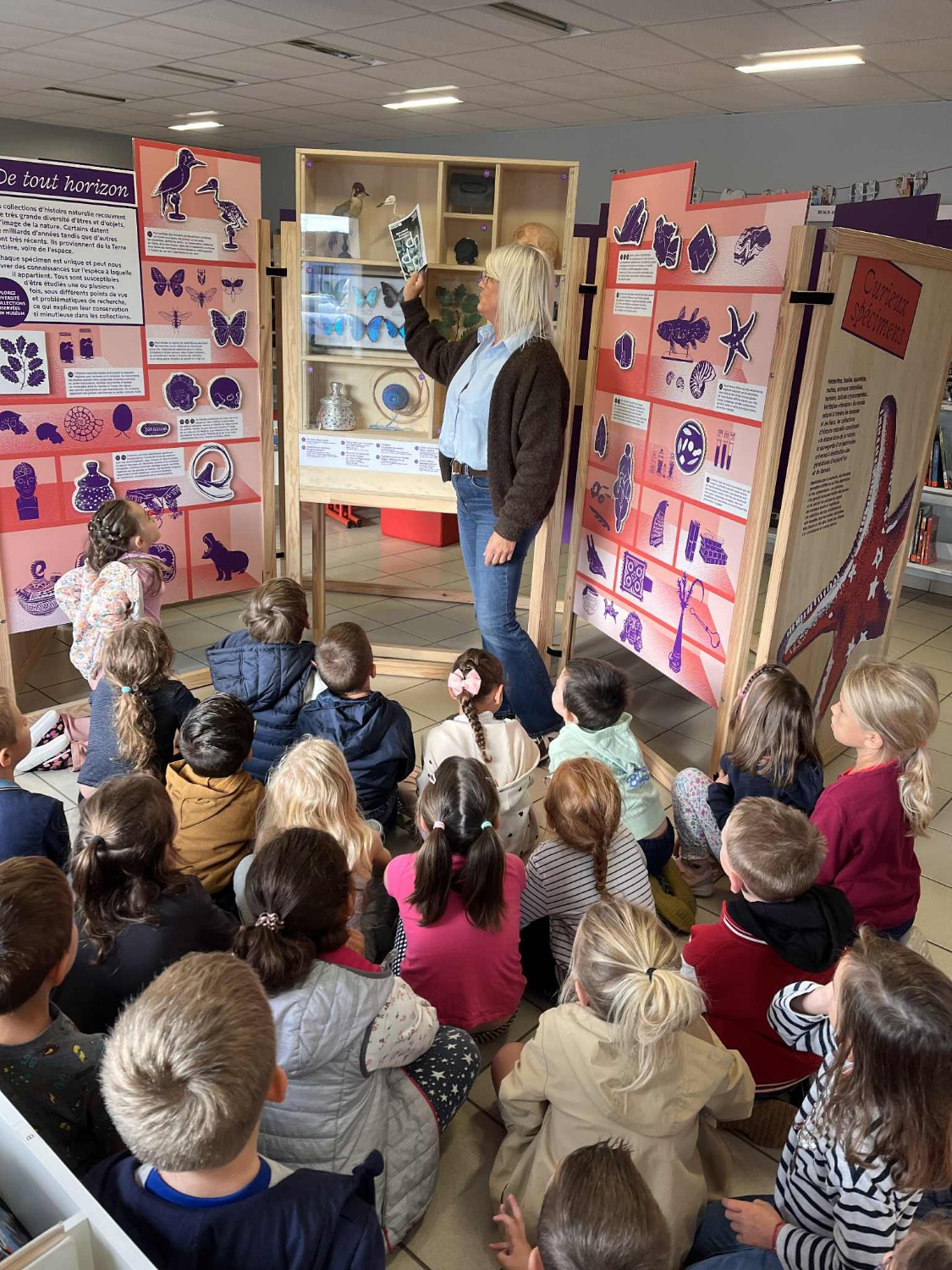
The exhibition has been touring the Hauts-de-France region for over a year and will continue to do so for another two years. It has been successfully presented in a diversity of venues, including schools, media libraries, nature centres and companies. Generating very positive feedback, the exhibition has reached a wide range of audiences. Some venues were ‘delighted that this type of initiative has come to them’ and stressed ‘that it is significant for visitors that the content is provided by a national institution’. The diversity of the host venues, with partners ranging from towns of less than 2,000 inhabitants, to cities of 150,000 inhabitants, confirms the interest of local authorities in programming this type of exhibition format. An event which makes it possible to reach audiences of wider socio-economic backgrounds. The 2026 schedule is almost fully booked for this project.
According to audience surveys, conducted by Ombelliscience, the exhibition has so far been seen predominantly by schoolchildren (53% from nursery school to secondary school). This is a success for the MNHN, for whom school audiences are the main target. It was a lso a success with wider general public audiences (29%, including 6% aged 18-25).
Designed as an educational tool for all, the exhibition has also been presented in companies to raise awareness among professionals and employees, as part of work seminars about the natural environment. It was very well received by this completely different audience as well.
Our constraint was that the Pop’ups had to be modular, easy to assemble and dismantle, painless to transport, and comfortably hostable by any venue, including economically.
How can we create an exhibition that is at once ultra-modular, robust and sustainable ?
The exhibition had to stand out from the usual exhibitions offered by the MNHN. We had to innovate in order to reach new venues with a wide variety of spaces and resources. Our constraint was that the Pop’ups had to be modular, easy to assemble and dismantle, painless to transport, and comfortably hostable by any venue, including economically.
Robust and sustainable
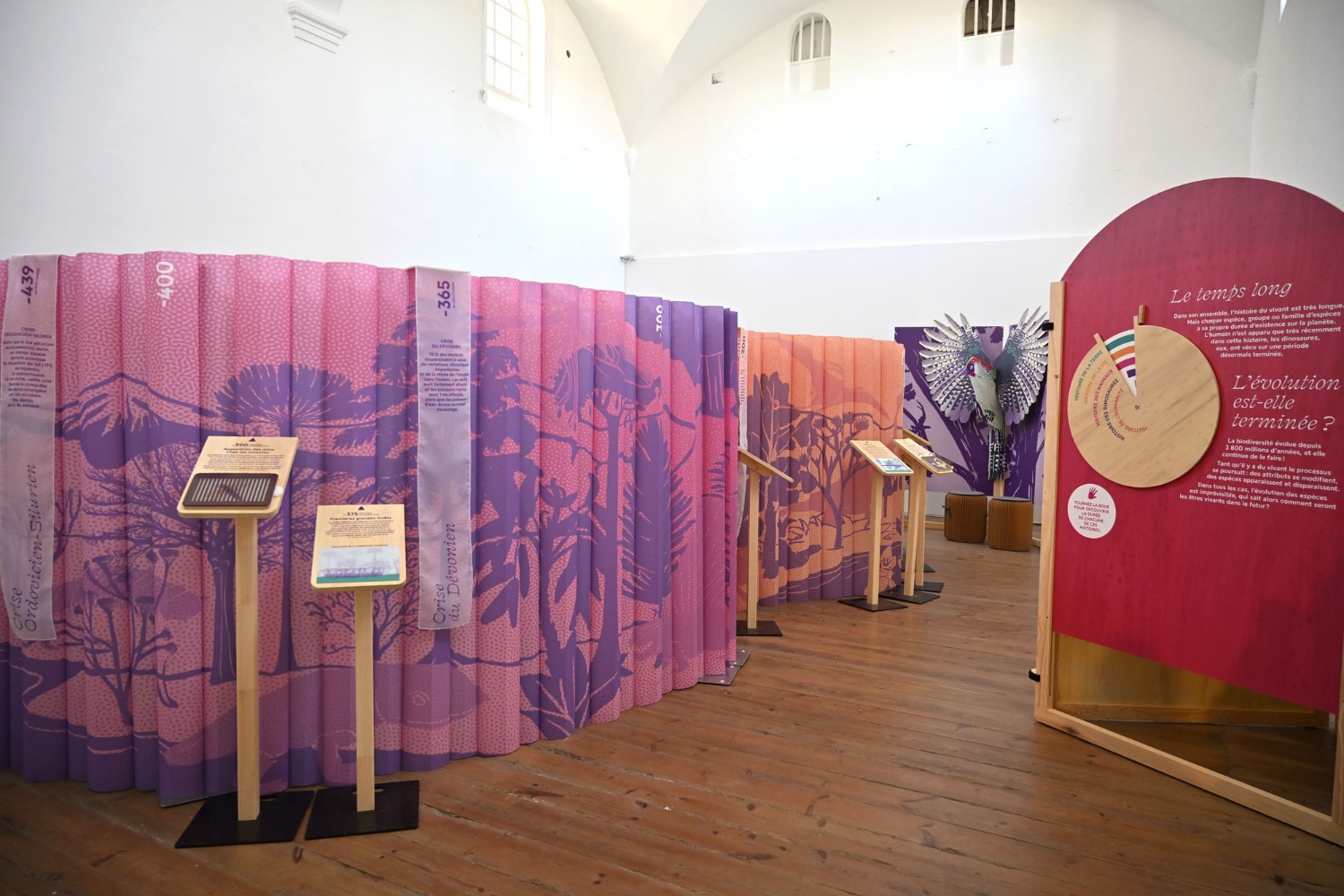
The exhibition was designed to be both robust and transportable, which meant it needed to be lightweight. Ombelliscience provided assistance, guiding the museum team in their choices of size and materials.With sustainable development in mind, the exhibition was primarily made of raw wood and honeycomb cardboard.
The exhibition was designed to be available in a digital format, supplied via a rights license and the provision of plans. This format makes it fully reproducible and adaptable to many cultural contexts and exhibition set-ups.
Logistical and financial accessibility
A key factor for the project’s success was that future partners needed to easily take ownership of the exhibition, encompassing the content, the format, and the logistical and financial aspects.
We worked closely with our partner Ombelliscience for two years, from the initial design phases and throughout all stages of production with manufacturers, to develop the Pop-Ups of Natural History: five functional modules designed to be compact for transport, witheverything fitting into a small truck, and easy to assemble and dismantle, by only two people.
The exhibition's primary objective is to explain the role, foundations, and importance of natural history, while highlighting its critical role in understanding the world, particularly in relation to environmental issues.
How can the complex, rich topic of natural history be addressed in a way that is open and accessible to the widest and most diverse types of audiences ?
The exhibition’s primary objective is to explain the role, foundations, and importance of natural history, while highlighting its critical role in understanding the world, particularly in relation to environmental issues. The widespread dissemination of this fundamental scientific knowledge is the core mission of a science museum.
The topics : The Fundamentals of Natural History
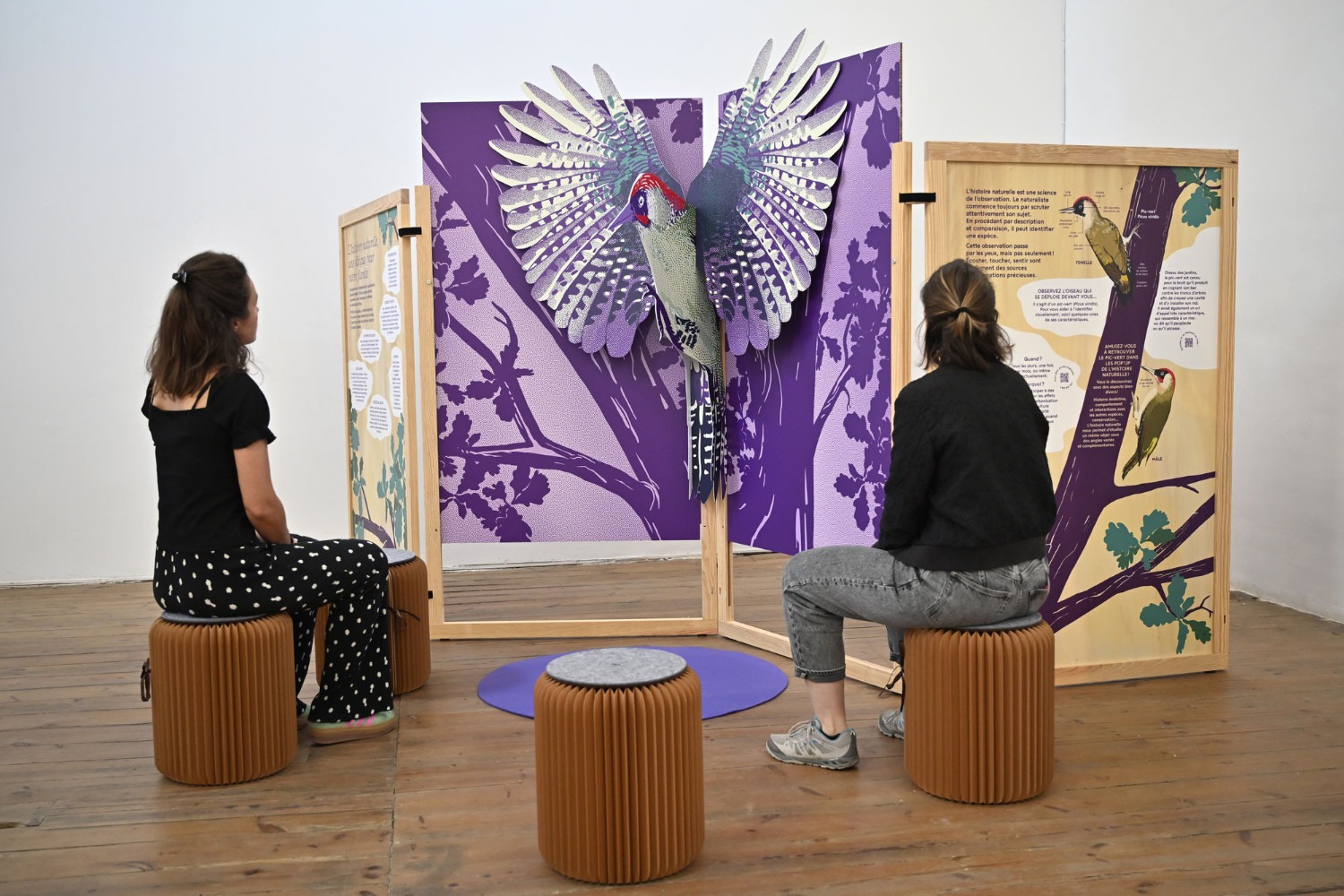
POP’UP 1: Natural History An introductory module to understand what natural history is and its role in our society.
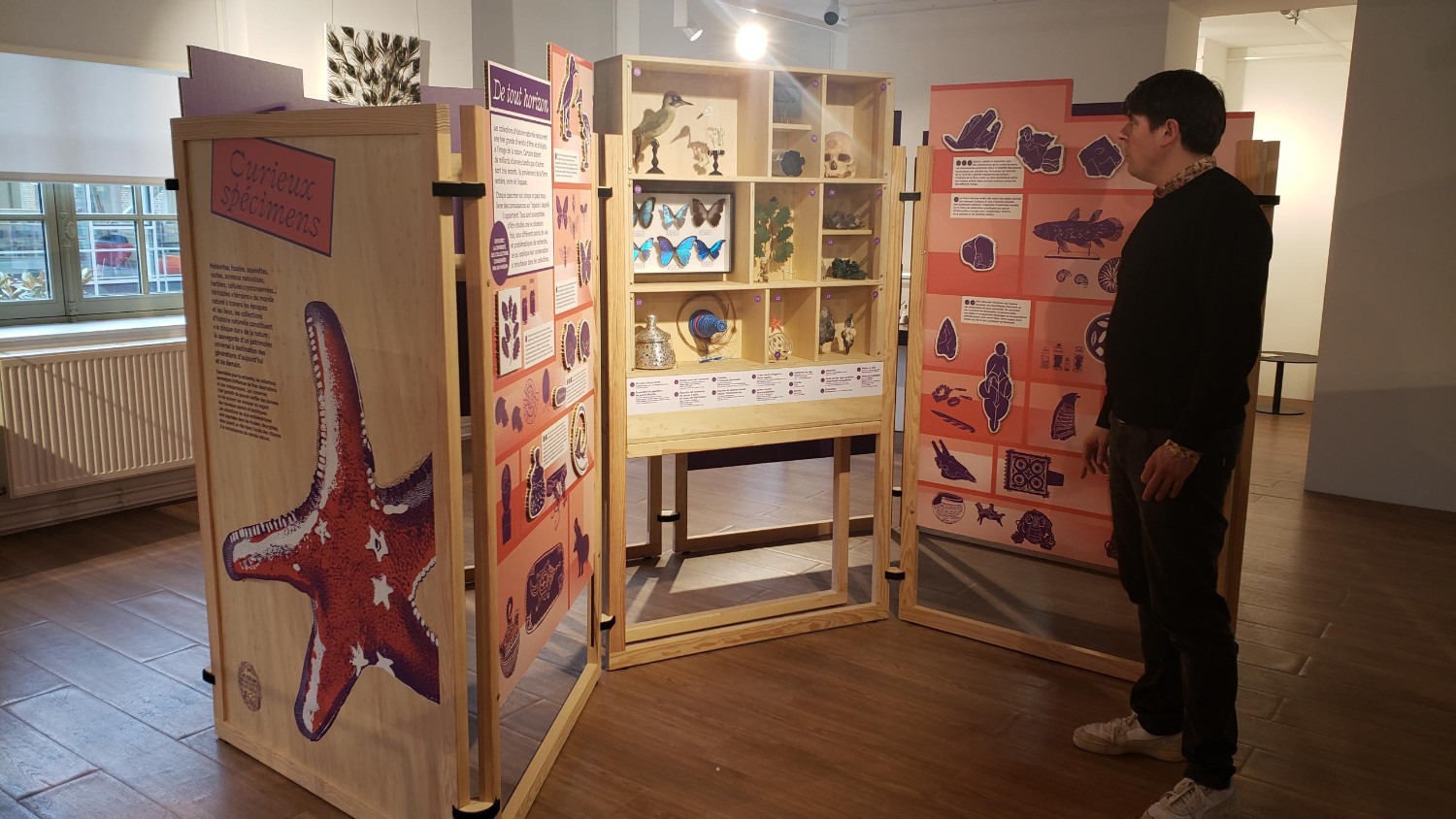
POP’UP 2: Curious Specimens A cabinet of curiosities to discover the great diversity of objects preserved by a museum, and the crucial role that natural history collections play for research and in our society.
POP’UP 3: Family Reunion! An illustrated “Tree of Life” to visualise our family ties with other living species and to deconstruct certain misconceptions.
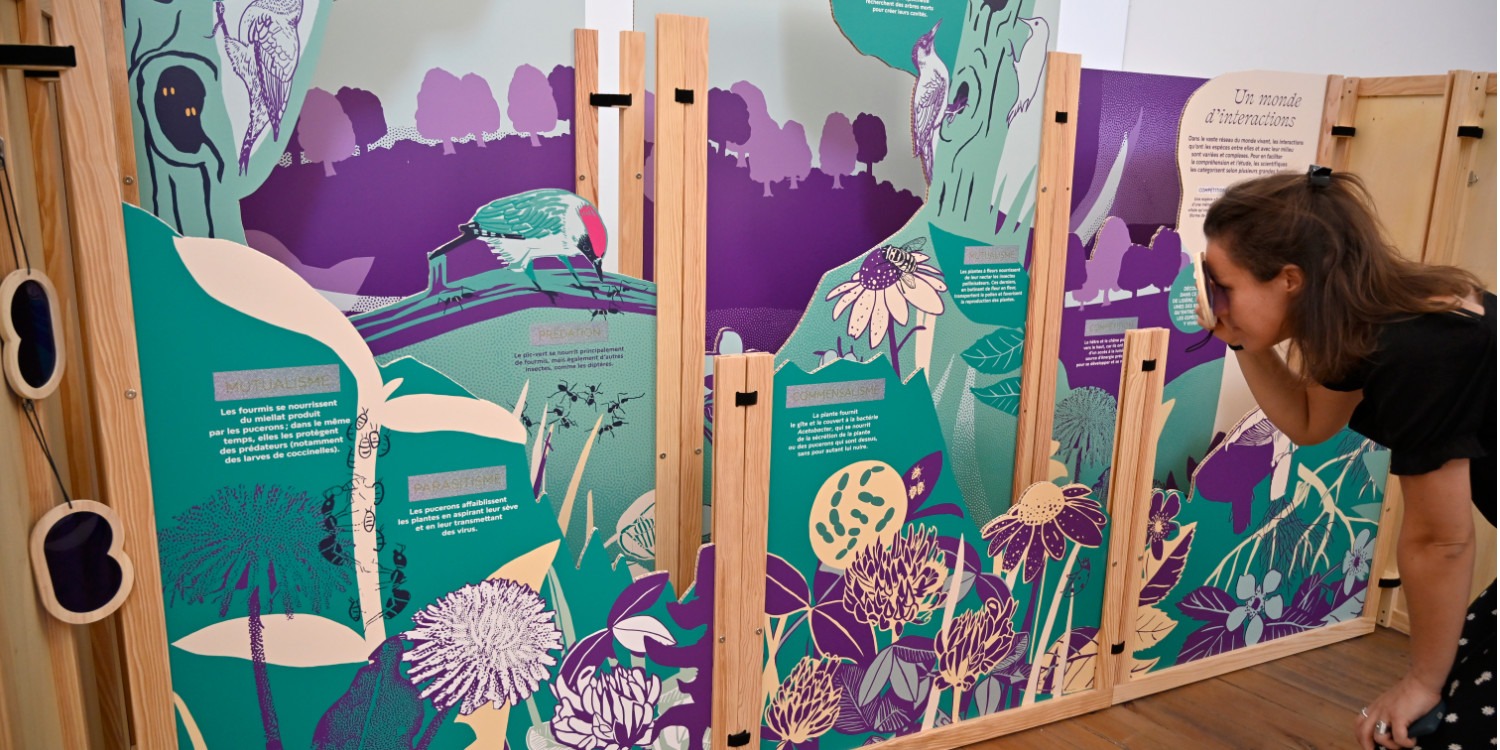
POP’UP 4: All Connected An exploratory module composed of a large diorama and small interactive elements to examine the concept of ecosystems and interrelationships in the living world through two examples.
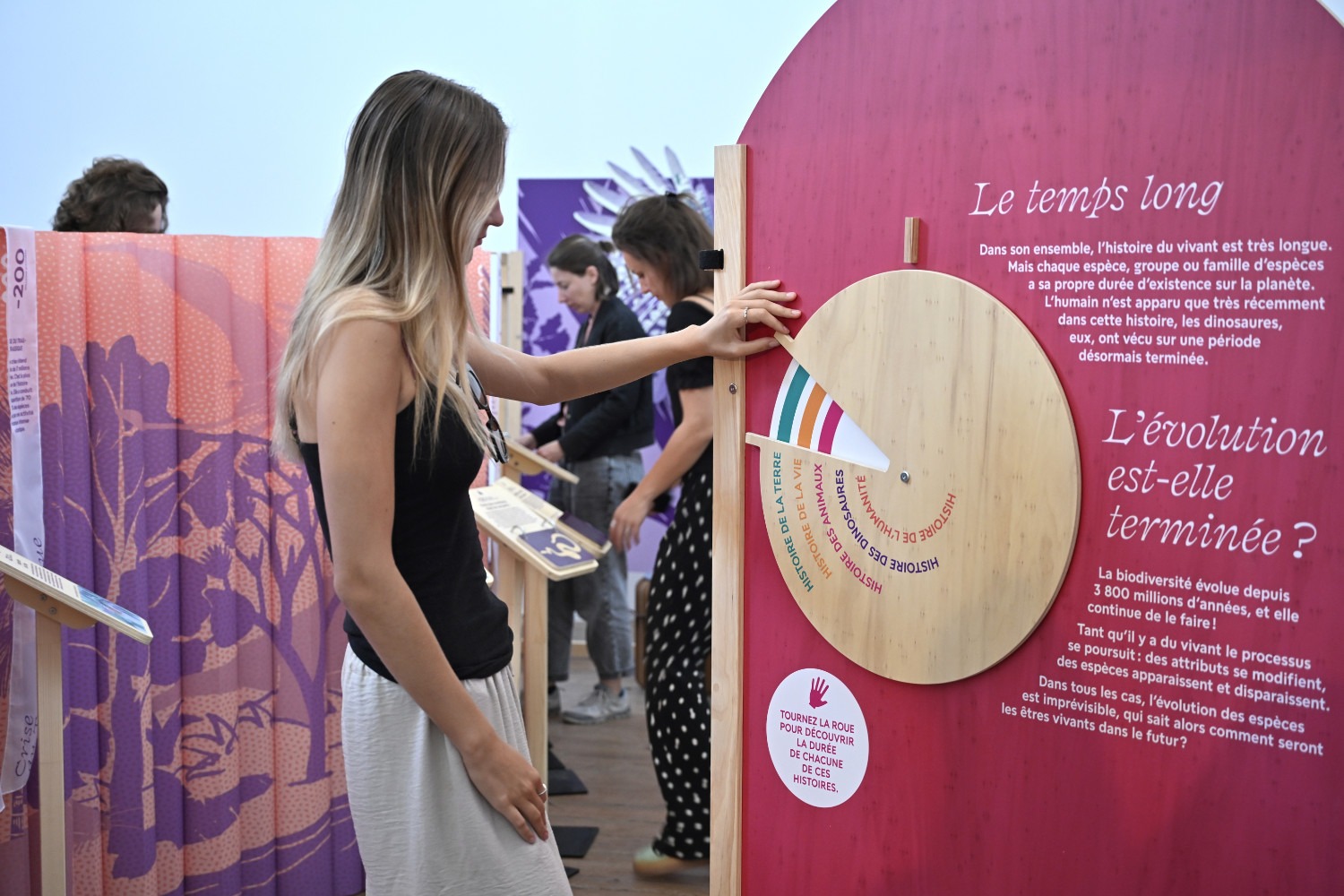
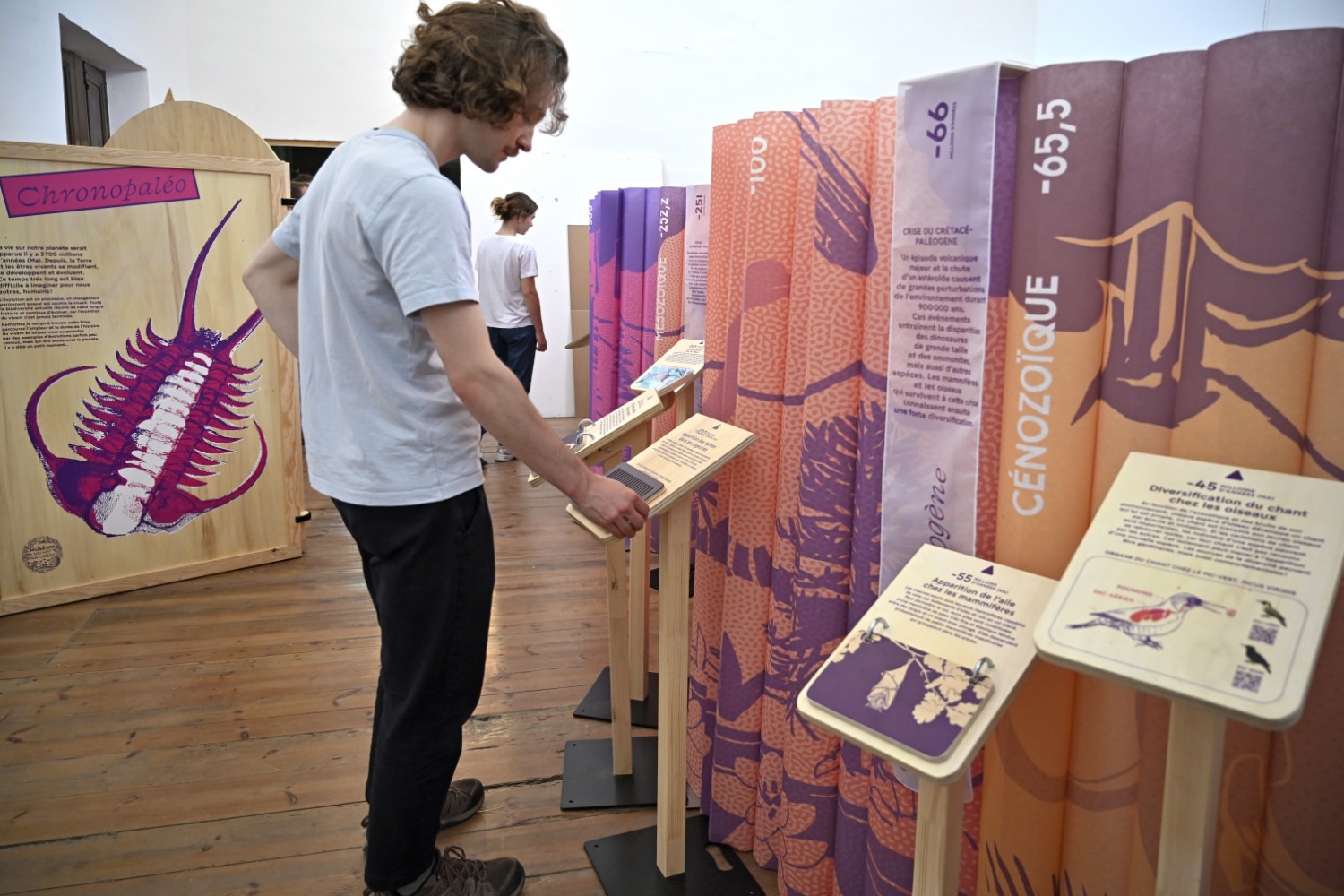
POP’UP 5: Chrono Paleo A chronological module that allows visitors to travel through the ages of the Earth and perceive the evolutions of environments and species.
This experimental format and partnership were a success, enabling the MNHN to reach new venues and audiences, but also shedding light on new perspectives for museum education.
Accessibility
Every effort has been made to make the content of the Pop-Up accessible to as many people as possible. Although the content is designed for independent readers aged 10 and above, it is also suitable for adults who are unfamiliar with these scientific topics. Younger audiences will find plenty to observe and understand in the colourful graphics and illustrations when accompanied by an adult. According to an audience survey conducted by Ombelliscience, all respondents (100%) found the content understandable and accessible and 83% found it aesthetically pleasing and attractive. The interactive approach stimulates the curiosity of young and old alike.
——-
In conclusion, this experimental format and partnership were a success, enabling the MNHN to reach new venues and audiences, but also shedding light on new perspectives for museum education. The exhibition will be available for new presentations from 2026 onwards.
As a major figure in scientific culture in France and abroad, the Muséum national d’Histoire naturelle offers travelling exhibitions to reach new audiences. These are tailor-made, self-build exhibitions, that can be adapted to different venues in accordance with museographic objectives and spatial constraints.