Touring exhibitions face a challenge to deliver powerful, sometimes site-specific stories to diverse audiences around the world, without losing impact or authenticity. Audio guiding technology is a resource that is getting more and more harnessed by touring exhibitions hosts and producers to engage with audiences, enhance local visitor experiences, and support the delivery and management of exhibitions at their different tour stops. From enabling storytelling beyond the original site to providing actionable data, here is an insight into how audio guides can creatively support storytelling in touring exhibitions, with the example of the Anne Frank travelling exhibition.
Bringing site-specific stories to new audiences
Some stories are inextricably linked to a place. The story of Anne Frank, for example, is deeply rooted in her hiding place in the Netherlands, and the museum that preserves her legacy. It has always seemed complex to capture and communicate this sensitive narrative outside of that location.
The US has long been the Anne Frank museum’s largest international audience, with American support playing a vital role in keeping the Frank family’s story alive since the 1950s. The touring exhibition Anne Frank The Exhibition was created to offer audiences on the other side of the Atlantic the chance to connect deeply with her story. It debuted in New York, at the Center for Jewish History in New York.
The exhibition features a life-size model of the Secret Annex, where Anne Frank and her family hid for over two years. This is the first time such a reconstruction has been presented outside the Netherlands. Visitors are guided through key moments of Anne Frank’s life, with historical artefacts, photos, and film clips bringing context to her story. To support the engagement with the story, carefully curated audio tours have been created for visitors, guiding them in a way that brings the objects, images and historical context sensitively to life despite being thousands of miles from the original site.
The flexibility in the access to content ensures that each visitor’s journey can be both personal and educational, and engagement can be sensitively built for a diversity of profiles.
Personal, emotional and educational experiences for each individual
Beyond simply narrating facts for an educational experience, audio guiding can help foster emotional connection in experiences on tour. This is especially important in exhibitions like the Anne Frank experience, where what is shared lies in her words and the intimate story behind them. Easy to trigger and multi layered content make it possible to share this story with visitors, in a way where they can engage at their own pace, and choose between different depths of information. This flexibility in the access to content ensures that each visitor’s journey can be both personal and educational, and engagement can be sensitively built for a diversity of profiles.
For the tour of the exhibition, a dedicated children’s tour was developed by the organisers for younger visitors, which enables schools and families to access a version of the exhibition that is age-appropriate and is designed with sensitive and relevant emotional and educational value.
In New York, the research highlighted that the large majority of visitors opted for the full, more detailed experience, spending more time with the story and its emotional resonance.
Seamless user experience for visitors and for hosts
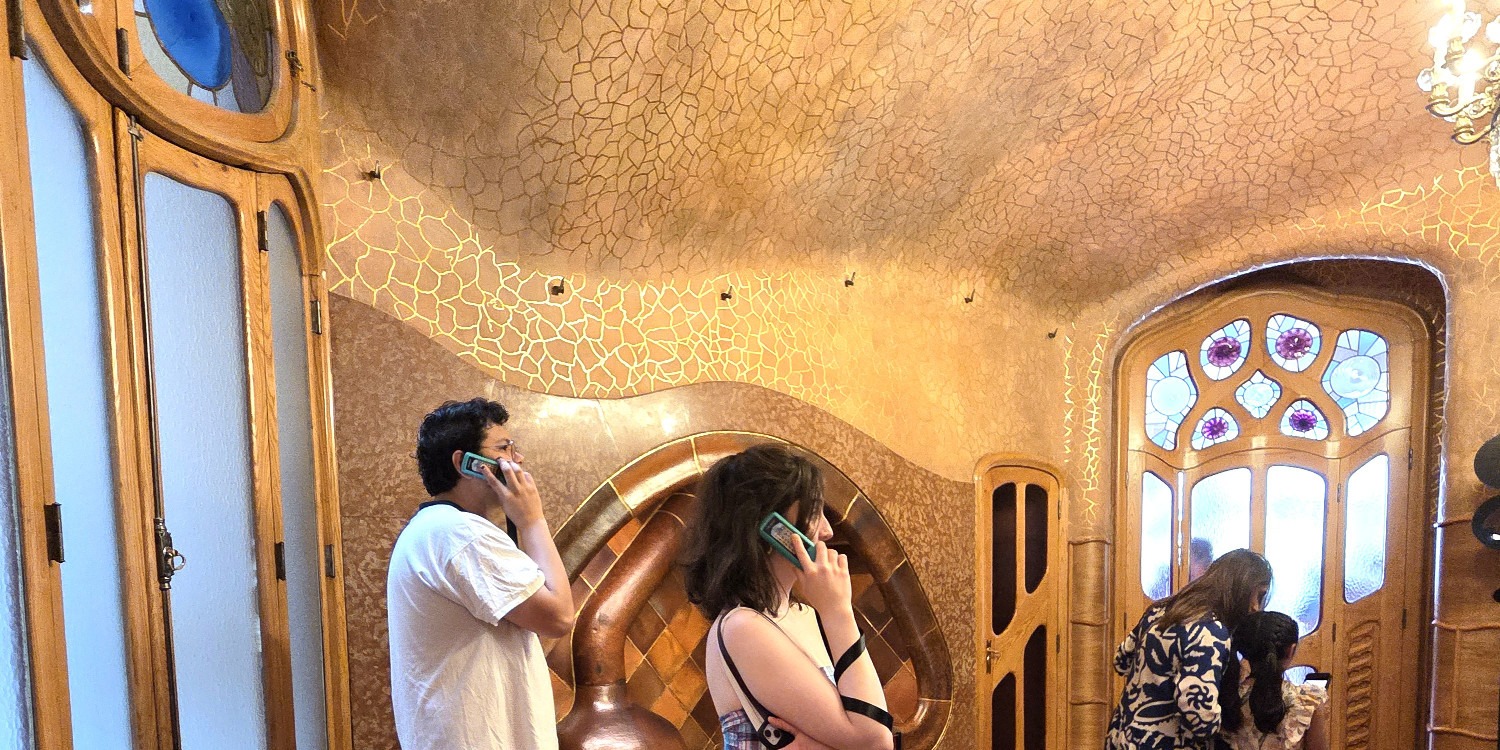
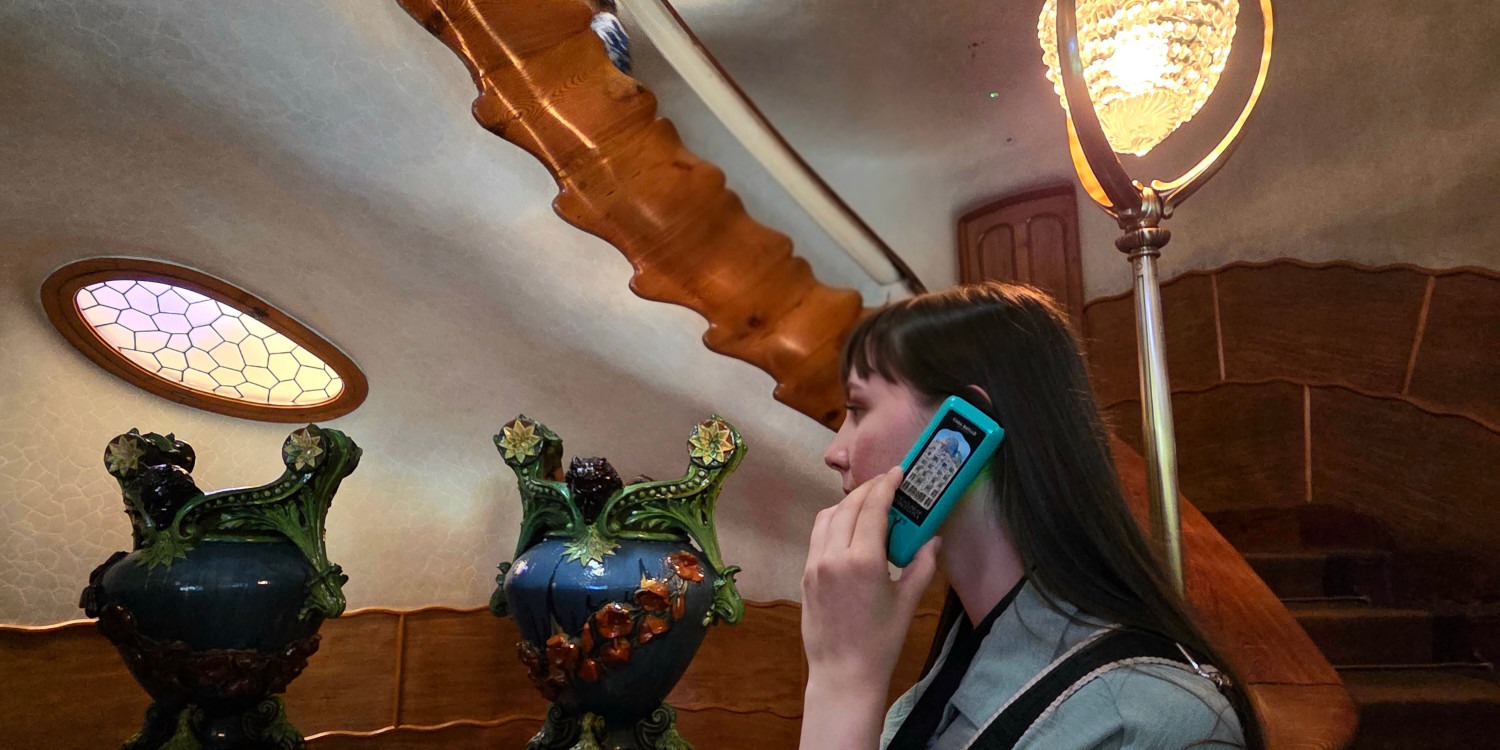
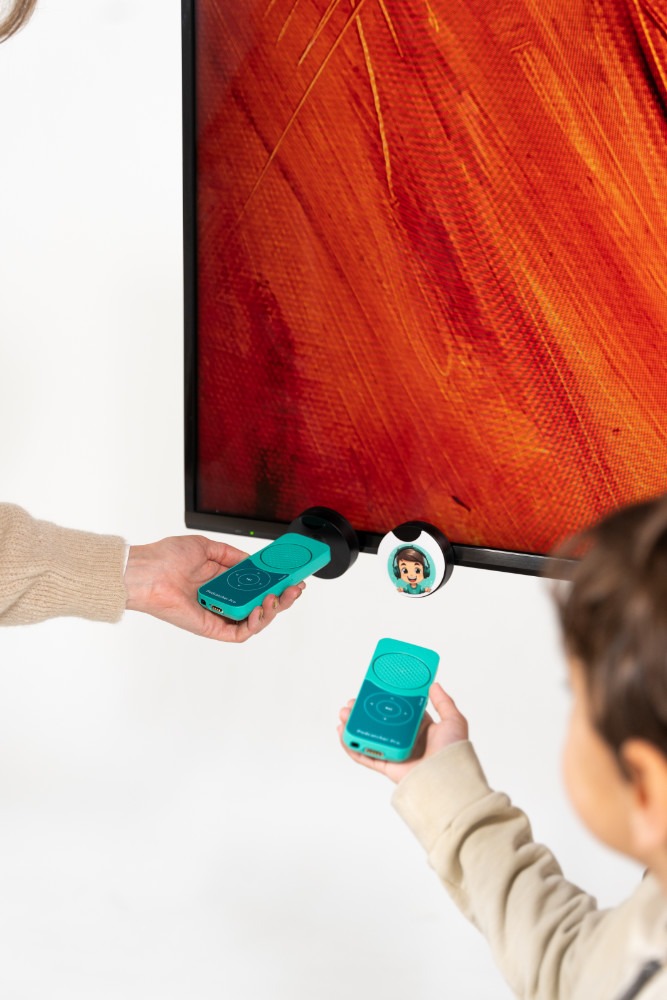
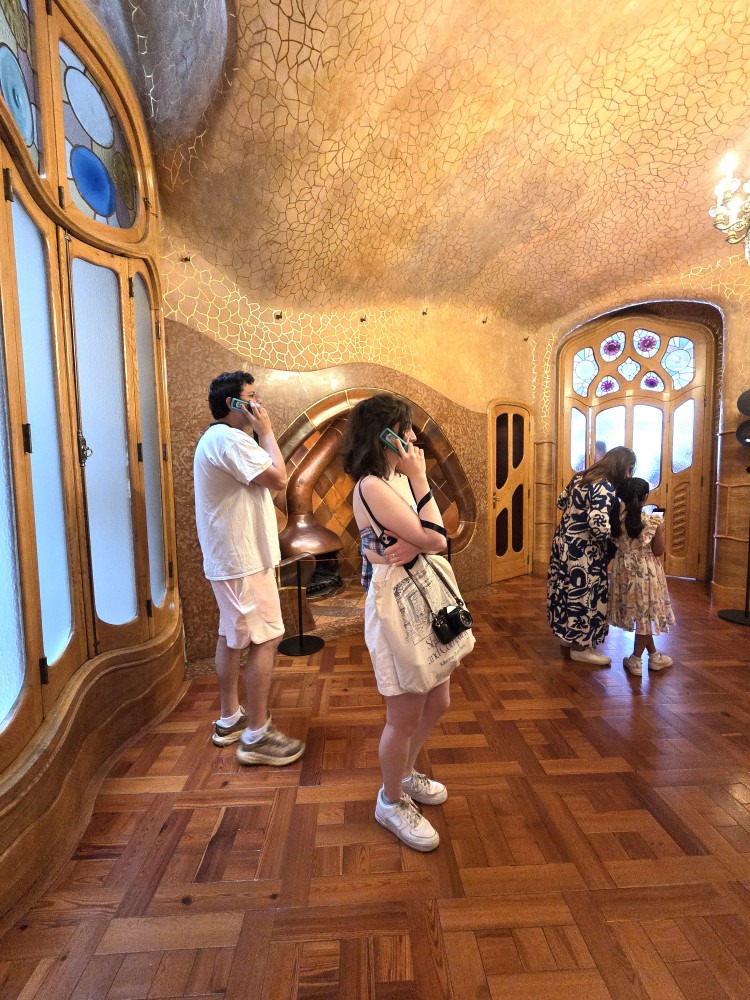
To be impactful, an audio guiding solution must be easy to use both for visitors and staff. At Casa Batlló, which integrated an audio solution for its tour, as well as in the Anne Frank exhibition, exhibitions receive high volumes of daily visitors. For both projects, audio guiding help organisers support visits, with solutions that can handle this scale without creating logistical headaches. Audio guiding technology blends into the visitor journey without ever interrupting it, with little to no staff involvement. While the Anne Frank exhibition delivers personalised content with simple triggering systems, where visitors simply point their device toward a beacon for the audio to start, the Casa Batlló project provides automatic, location-based audio playback where as guests move through the house, the right story plays at exactly the right moment, letting them stay present in the space.
A major challenge for touring exhibitions is the need to adapt content to different locations, languages, and audiences, often while juggling with tight budgets and timelines. For hosts, behind the scenes, uploading and managing content, scheduling updates, and fine-tuning the experience needs to be fast, easy, and intuitive. For these projects, a personalised platform where organisers could easily generate, adapt, and translate content, contributed effectively to the delivery of a high-quality tour.
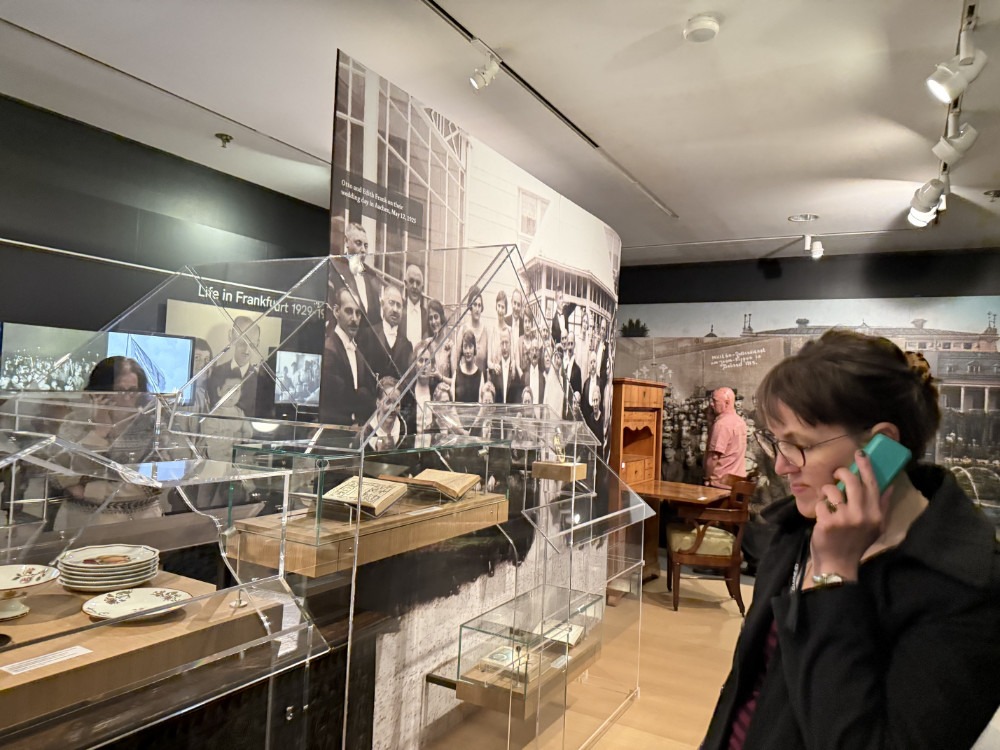
A major challenge for touring exhibitions is the need to adapt content to different locations, languages, and audiences, often while juggling with tight budgets and timelines.
As an example, the Anne Frank exhibition in New York features more stops than its Amsterdam counterpart. The content has been adapted and enhanced before being uploaded to the platform and translated into multiple languages. AI-generated voice-overs in multiple languages, with the possibility to manually tweak text when needed, contributed to support hosts with a tailorable visitor experience. The practicality of the set-up was also essential, with all materials shipped directly to the exhibition site, and the possibility for local staff to have the system up and running autonomously within two days.
Gathering insights into user experiences
Understanding how visitors interact with an exhibition is crucial to allow for producers and hosts to adjust and improve visitor experiences. Audio guiding platforms can provide monthly analytics and data that reveal key visitor behaviours to exhibition organisers: which stops are most listened to, how long do visitors engage with the content, which languages do they prefer, and where drop-offs occur. This enables hosts to tweak the tour where necessary, and continuously refine immersive storytelling.
For the Anne Frank exhibition in New York, the results were very positive for the organisers and hosts. Data showed that most visitors listened to nearly every stop, demonstrating deep engagement. When particular stops received less attention, the team could investigate if there were issues with the content, or the placement of beacons. Real-time alerts, such as low battery warnings or beacon errors, contributed to ensure the system remained reliable throughout the exhibition’s run, with all data insights having the possibility to be quickly acted upon via the online platform.
Audio guiding can be a strong asset for cultural experiences on tour thanks to its individualised, immersive, portable nature. To enable a fully successful experience, when integrating audio guiding technology into touring storytelling, organisers can look out for flexible setup, easy adaptability, efficient content management, and actionable insights. By leveraging these, exhibition organisers can deliver powerful travelling storytelling experiences that resonate with audiences worldwide while simplifying the logistics and enhancing visitors’ experiences.
About the authors & contributors