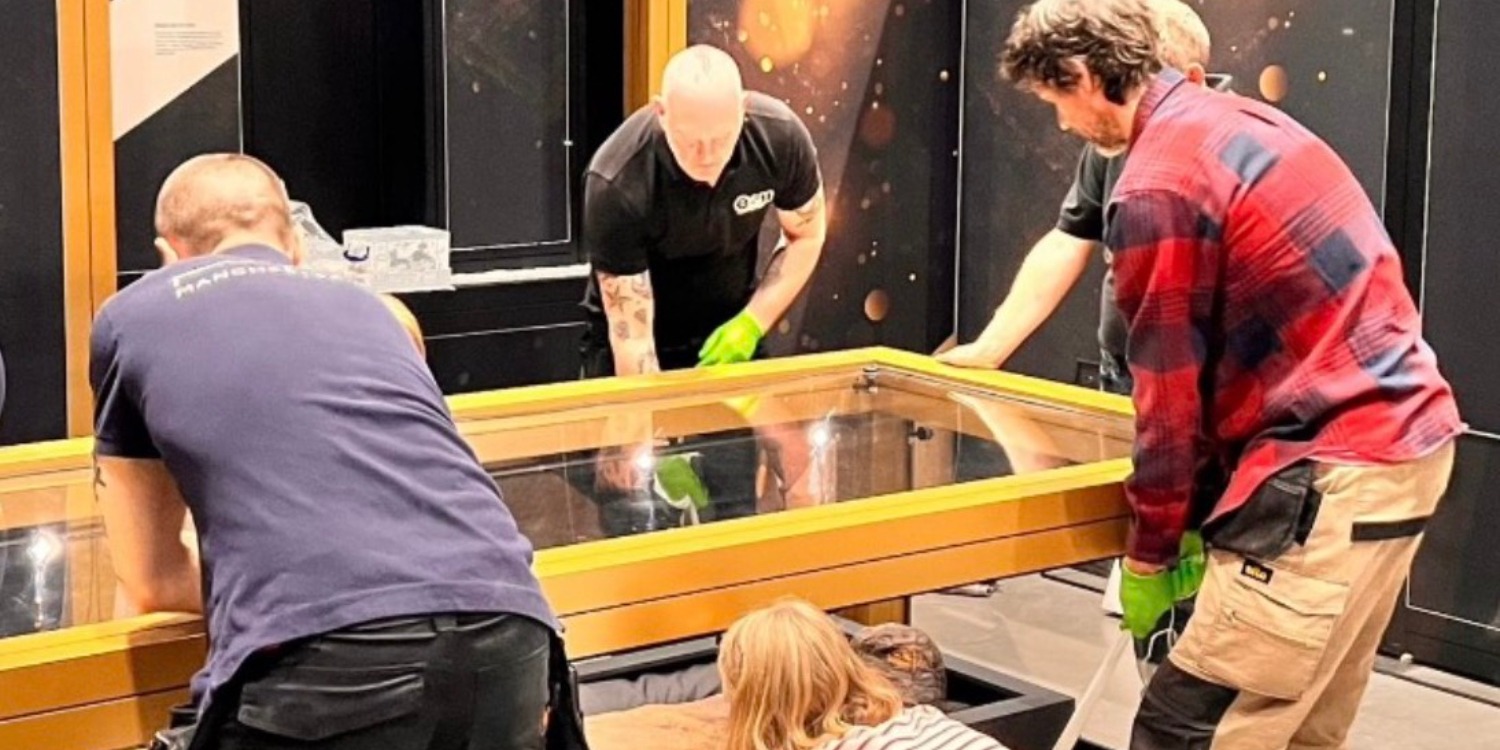
The installation of touring exhibitions into hosting galleries is a key sequence integrated in a chain of interdependent stages which involves many stakeholders. Since 2014, EXSM Ltd has been managing touring exhibitions installations and deinstallations around the globe, with a large diversity of systems, materials and construction methods. We have been participating in the technical magic that happens behind the scenes to bring collections, stories and experiences to new audiences, working in close collaboration with producing teams, host venues, and supplier partners. In this article, we share some of the collective knowledge we have accumulated, with 5 key things to consider when planning for a travelling exhibition installation.
Know your exhibition
To ensure that the delivery goes smoothly once on site, collaborative preparatory work is fundamental. For a good logistics and installation framework, it is essential that the delivery support teams have detailed knowledge about the exhibition they are working with.
The work of a logistics and installation team ideally starts well before install days, if possible several months ahead. It can sometimes be condensed down to a week before delivery-day, as long as the team has had the time to review the exhibition’s detailed information, and plan the delivery schedule with the project stakeholders.
One of the best ways to learn about an exhibition that will be going on tour is to see it in its first venue. An exhibition visit and a chat with the people from its original host venue allow the teams to ascertain the quantities, size, weight, and specifics of each element of the show before they actually start handling it. This on-site review gives them the opportunity to look out for heavy, bulky, high, large, fragile, and not perfectly levelled elements, as well as items that are complex to assemble and that might be trickier to replicate in another venue. This way they can identify any potential issues or areas where special consideration might be required, and envisage details of the installation and deinstallation procedures.
Another important element, essential when a visit is not possible, is for the team to receive and review in advance a gallery layout document with dimensions and some photos of the space and exhibition, with the opportunity of a joint review with the project team. This is often supported by a technical rider or handbook which give a general view of the technical requirements for the exhibition. Sometimes, an exhibition has been initially designed as a temporary exhibition, and the idea to tour is only a secondary consideration. On other occasions however, the exhibition has been purposefully designed to tour, and has not been manufactured yet. In these cases, meeting the client and looking over their plans, drawings and layouts is the only way to get to know the exhibition and work out how it is intended to be built.
Although this is rare, occasionally an exhibition does not fit into the gallery it is supposed to be going into. [...] When a mismatch happens, the logistics team reviews the space in collaboration with the venue and comes up with an alternative solution quickly.
Planning sequences and managing time
The installation and deinstallation of travelling exhibitions always occurs on tight working schedules, and the timing is influenced by multiple factors.
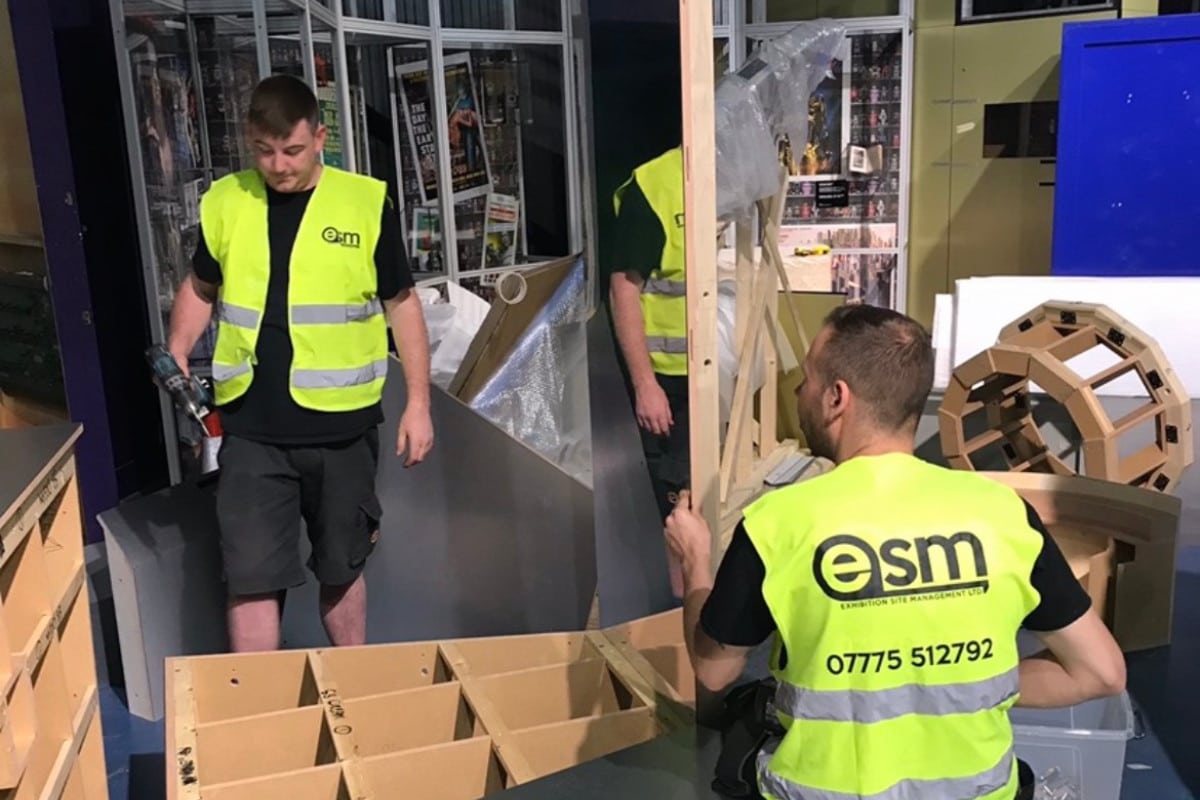
The duration and development of the procedure are usually prepared by the exhibition producer and communicated to all involved parties. Hosting teams decide and organise the closing of the exhibition galleries to the public, and define the venue’s access routes. Installation teams can support the process with time-saving strategies. A sequenced delivery plan identifies the progressive execution steps, and anticipates the coordination between the different teams, producers, logistics teams, art handlers, display elements makers, equipment rental, hosting teams, lighting teams, etc.
Deinstalling is also a crucial part of the exhibition management process, a moment where every element must be carefully protected to allow for a maximum of future presentations in other locations. Surprisingly, it can take up from 2/3 to 100% of the installation time.
Size Matters
Although this is rare, occasionally an exhibition does not fit into the gallery it is supposed to be going into. There can be several reasons for this. One example is that the CAD plans of the gallery provided to the exhibition producing team was old and did not include the latest changes in the space, for example if the gallery the exhibition was going into had recently had some renovations done, such as new internal walls, pillars or emergency exits.
The important thing to note is that on all the occasions this has happened to us, there was always a workable solution around it, and in each case the exhibition could be installed in full without either its aesthetic qualities or narrative being compromised. When a mismatch happens, the logistics team reviews the space in collaboration with the venue and comes up with an alternative solution quickly.
For smooth installation, it is important that any recent changes to the galleries, to the accesses and to the displays, even ones that can seem minor, are communicated to the project teams in advance. And when technical visits on site are not possible, detailed online visits with the hosting team can also work.
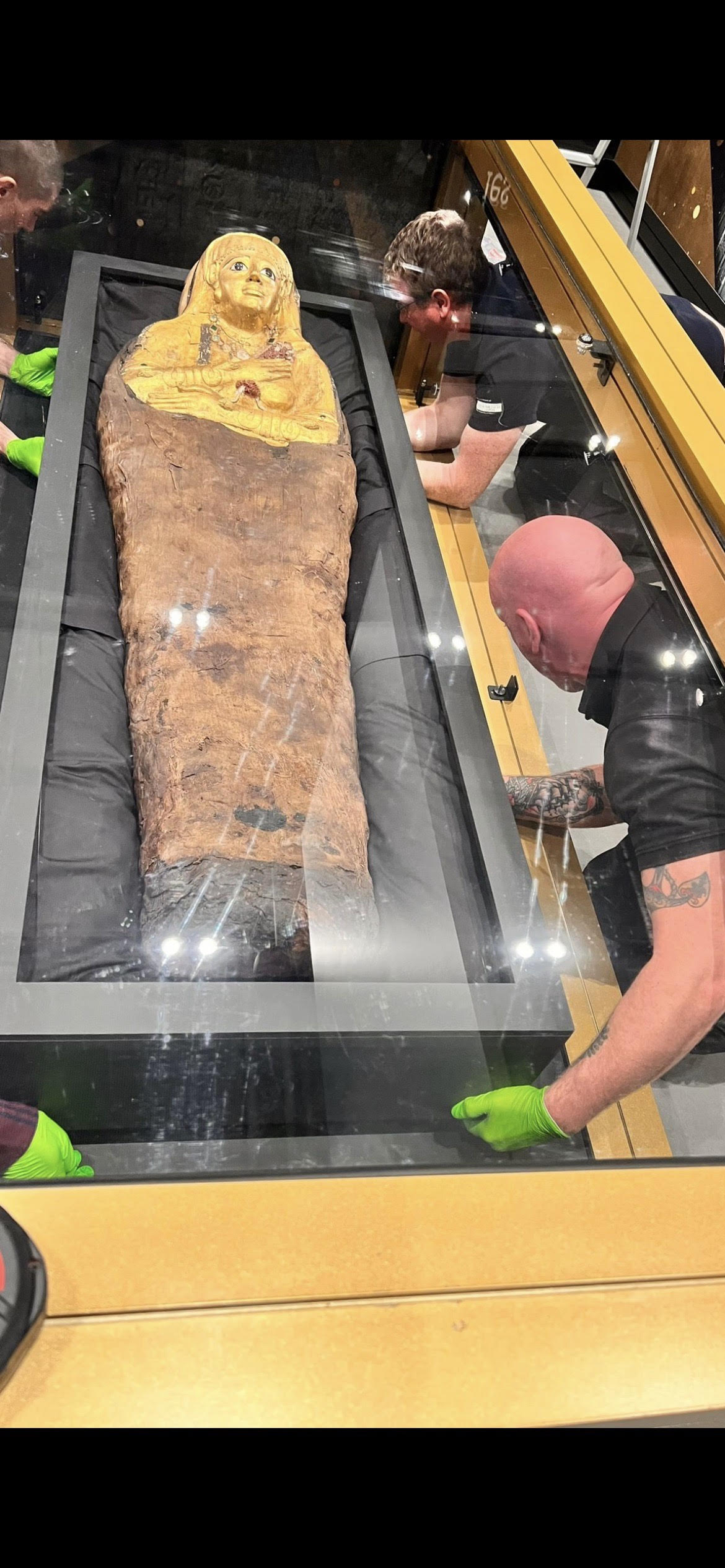
Sometimes getting individual parts of an exhibition into a gallery can be a challenge. Some venues, especially historic ones, have [...] features that (typo) can impede on getting certain elements of the exhibition into the gallery.
Routes and access
Sometimes getting individual parts of an exhibition into a gallery can be a challenge. Some venues, especially historic ones, have small entrance doors, steps, narrow corridors, low ceilings with services attached to them, and other features that can impede on getting certain elements of the exhibition into the gallery.
Recently, we had to get a very large cast of a bone into a gallery as part of an installation. The route from the goods entrance to the gallery was narrow and winding with several corners, and it appeared like it just was not going to fit. To find a solution, we walked every possible combination of entry routes to the gallery, and found one route that appeared possible. But it involved a lot of protecting for the cast and the museum building, and a set of stairs to negotiate.
We made a detailed plan for everyone involved to follow, and rehearsed the operation so that everyone knew their role properly. Effective, concise communication (including translation into the local language) was vital, along with constant evaluation of the process throughout the operation. The end result was that the cast ended up in the exhibition completely undamaged.
Health and safety considerations, and the planning of working conditions with the project teams, are a core priority. The logistics and installation framework must ensure that the teams are safe according to the country’s and insurance’s regulations, with a good understanding of standards, which vary from one country to the next. This is done in coordination with the venue and exhibition producer teams, who manage the exhibition’s and collection’s security conditions, including for the condition reporting.
Installations don’t happen in a vacuum: they occur in the real, imperfect world, and there are always solutions to these issues that mean the exhibition can still open on time. These take collaboration, compromise and flexibility.
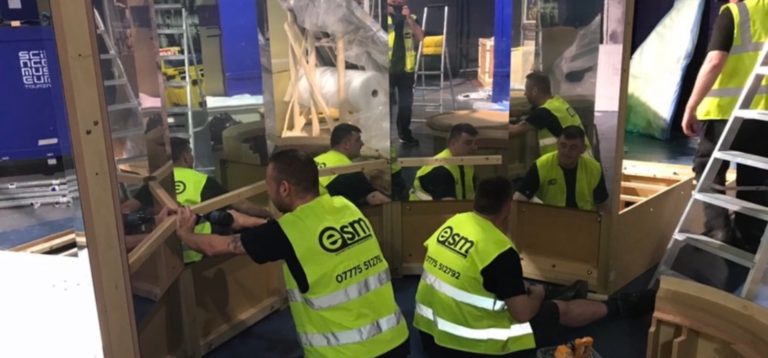
Embrace uncertainty
Bringing an installation team to a site, ready to work as per the planned installation schedule is the easy bit. But sometimes things go wrong, and plans need to be rewritten. It can happen that the exhibition is just not there, because it got stuck in customs, or because the local delivery agent did not turn up. We once arrived at a venue, and the first truck arrived, but on the way into the loading dock it hit a fire hydrant, causing a major water leak, and everything had to stop until the hydrant was repaired. On another occasion there was a typhoon where we were staying, so we were confined to our hotel until the storm passed.
Many hazards on the journey can impact exhibition and materials shipping, due to the complexities of international travels, weather hazards and geopolitical or economic drawbacks. Installations don’t happen in a vacuum: they occur in the real, imperfect world, and there are always solutions to these issues that mean the exhibition can still open on time. These take collaboration, compromise and flexibility.
—
Above all the most important factor to have in mind to design successful installations for touring exhibitions is that this is a human adventure. The collaborative working founded upon dialogue across borders and areas of expertise, as well as trust, flexibility and creativity, is what makes exhibitions installations such an interesting and key moment for the success of cultural productions’ international tours.
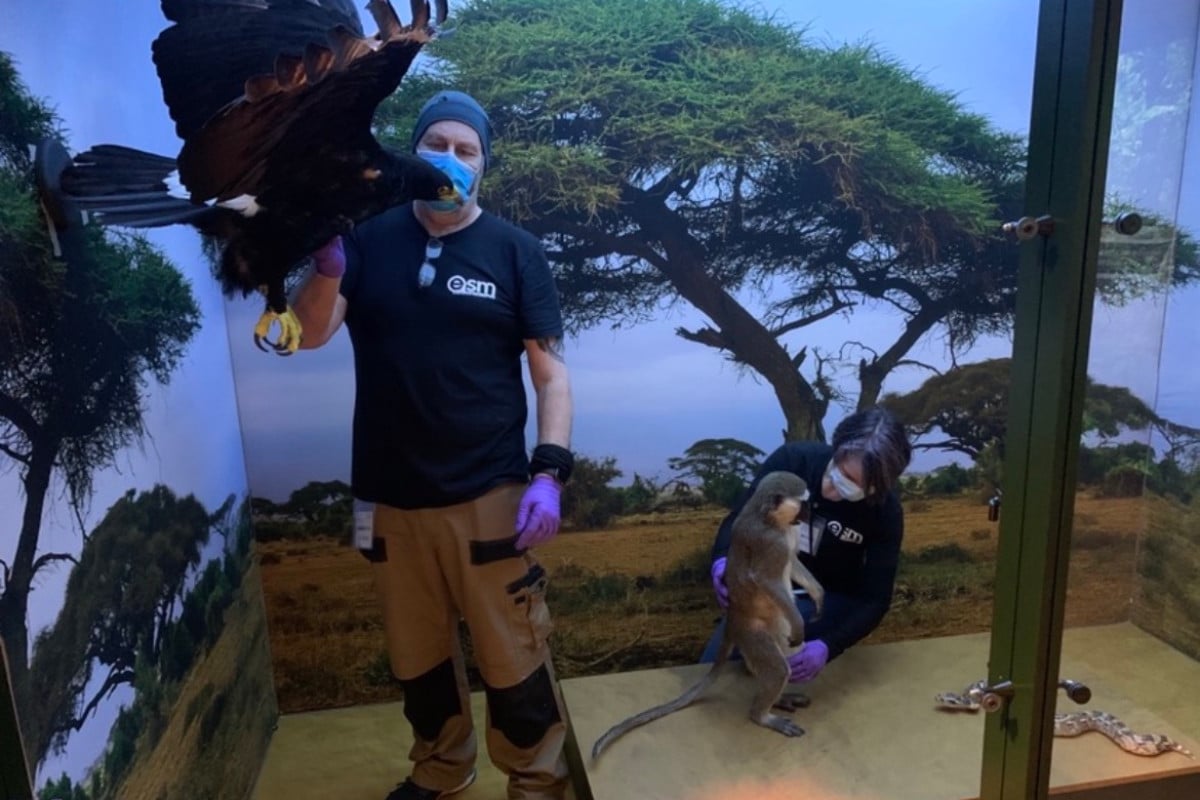
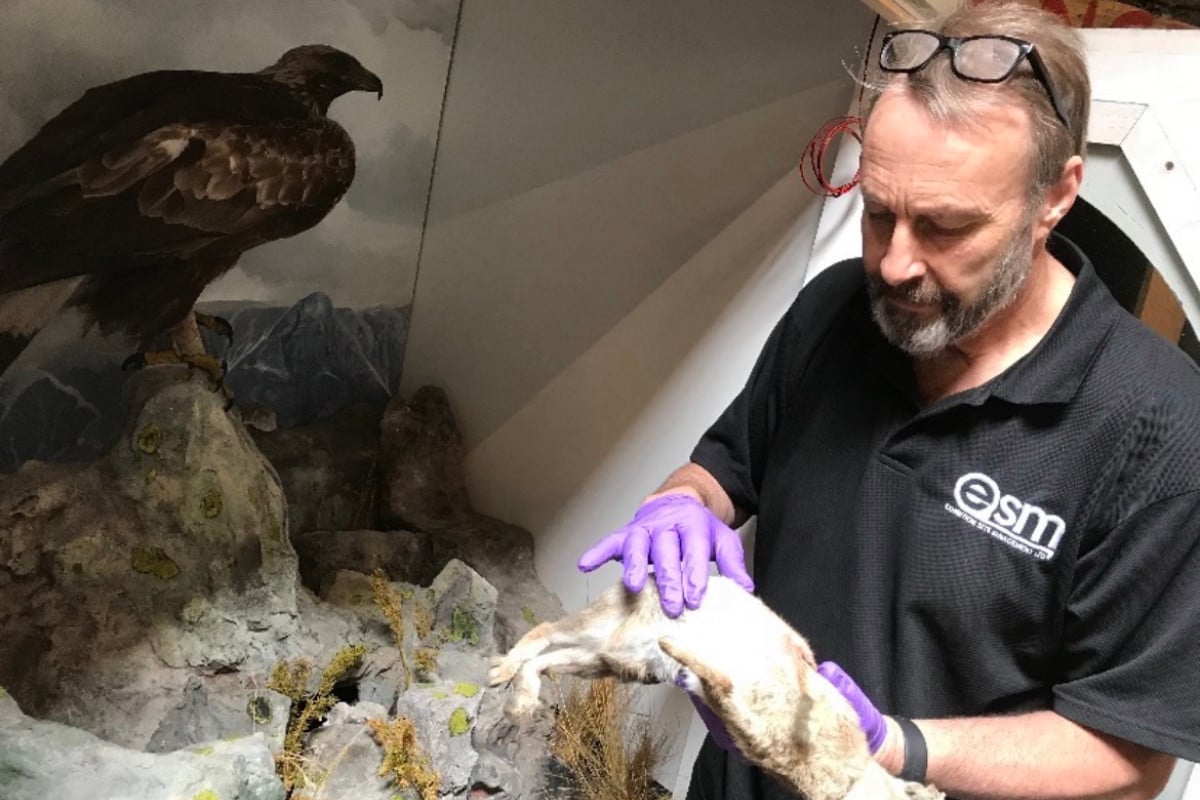
About the authors & contributors

Rob Gammage
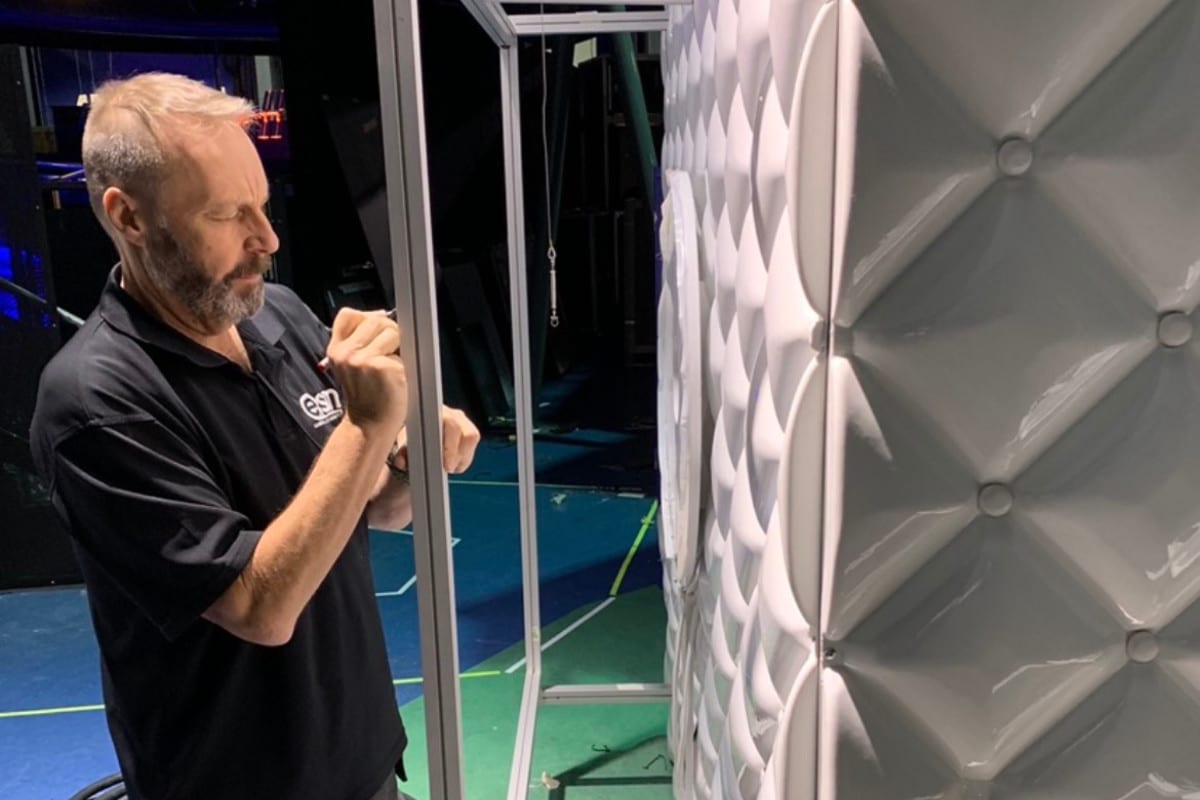
Rob Gammage is a specialist in touring exhibitions installation management, who provides installation services and install teams for touring exhibitions; for museums, science centres and private clients worldwide with his company Exhibition Site Management Ltd (ESM). Prior to founding ESM in 2014, Rob worked for the Natural History Museum in London for 10 years, where he supervised temporary exhibition installations, before managing the touring exhibitions installation team of the museum.