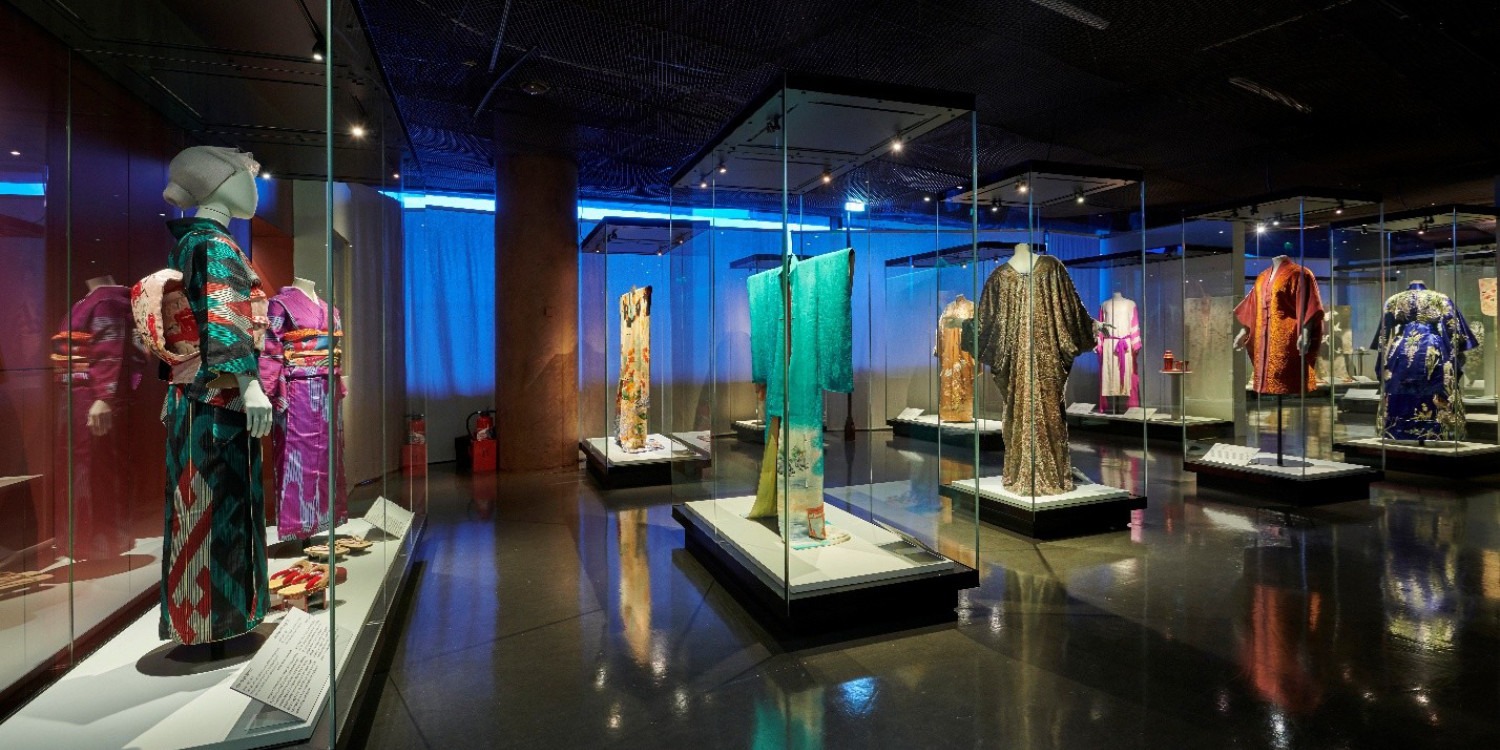
International touring exhibitions involve transport, logistical and installation complexities associated with collection loans. Host organisations, which receive and care for collections belonging to partner lenders, have to manage responsibility for insurance, security, conservation and related obligations. In this context of collaboration, showcases are essential tools supporting tours and the coordination of multi-party exhibition projects and loan arrangements. They should therefore be integrated in the exhibition and tour development from the earliest stages, both for the lenders and the hosting institutions, to ensure they contribute to ensure the highest levels of conservation and security throughout the whole process.
Key technical criteria for touring exhibitions
Showcase design is a critical risk factor in travelling exhibitions rather than a mere finishing touch. Touring formats impose specific constraints on showcases and collections that travel, including repeated transport, handling, and reinstallation across multiple venues. To safeguard artefacts under these conditions, the respect of uncompromising standards in conservation and security is essential. This encompasses stable climate control, controlled air-exchange rates, robust locking systems, carefully selected materials, and integrated monitoring systems that allow shared oversight and remote management by teams.
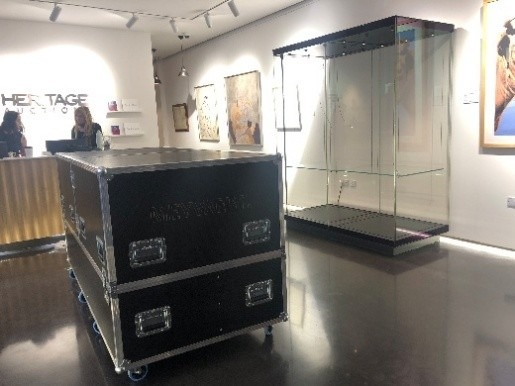
In addition, the provision of robust and reusable packing and transport systems designed for shared use between venues and during storage plays an important role in ensuring long-term protection, efficiency, and consistency throughout the exhibition’s lifecycle. For example, reusable flight case systems for modular demountable showcases enable exhibition producers to seamlessly manage their storage and logistics all along the touring process.
The respect of uncompromising standards […] encompasses stable climate control, controlled air-exchange rates, robust locking systems, carefully selected materials, and integrated monitoring systems.
Modularity, flexibility and standardisation
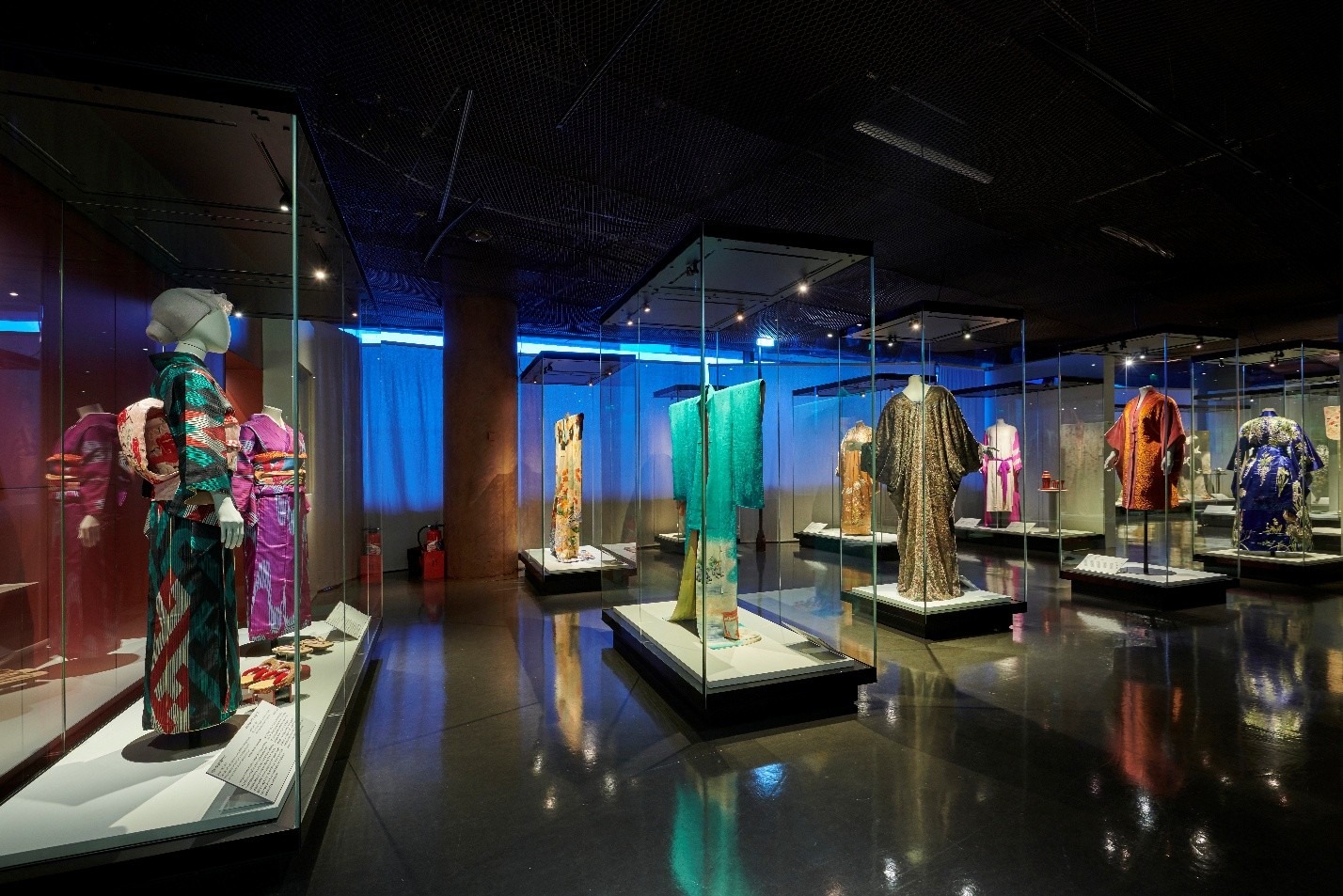
Whilst an exhibition’s contents may remain the same from one presentation to another, the shape, size and layout of each venue of a touring exhibition will vary. Standardised and modular cases are useful for addressing a variety of exhibition layouts and providing the flexibility and ease of use required for the management of complex international touring plans. The ability to create easily different case sizes and formats with the same core set facilitates adaptations and evolutions in exhibition layouts, and support repeated installations across venues. The flexibility of the system in its lighting, shelving, and in its ability to house projectors and displays, also helps support the development of tailored versions for the venues.
A well-planned modular set allows for smooth usability by technicians and registrars, and for project management involving remote parties from different organisations. This flexibility of the showcase system will also allow it to be reused in future exhibitions with different display requirements, thus contributing significantly to lower the global environmental impact of the exhibitions, and to optimise costs across a large number of presentations.
Integrated Collaboration: The example of the Smithsonian’s In Slavery’s Wake exhibition
Meyvaert contributed 34 custom-designed showcases to the global touring exhibition In Slavery’s Wake: Making Black Freedom in the World, developed by the National Museum of African American History and Culture in collaboration with Brown University and partner museums across four continents. The exhibition brings together a collection of objects, images, multimedia interactives, and films to explore the enduring impact of slavery, colonialism, and the struggle for freedom, inviting audiences worldwide to reflect on stories of resilience, resistance, and humanity. Meyvaert’s showcases were engineered to meet rigorous conservation and security standards while offering modularity and adaptability for different international venues, to support the exhibition’s mission to preserve and present this vital history with care.
The Meyvaert team was involved early in the collaboration with the touring team, which enabled the optimisation of the number of cases and internal elements, to match precisely the range of objects on display, and to ensure that the technical outcomes were aligned with the exhibition team’s design intent. Early planning made it possible for the teams to work closely together towards the design, budget, and timeline objectives for this major exhibition.
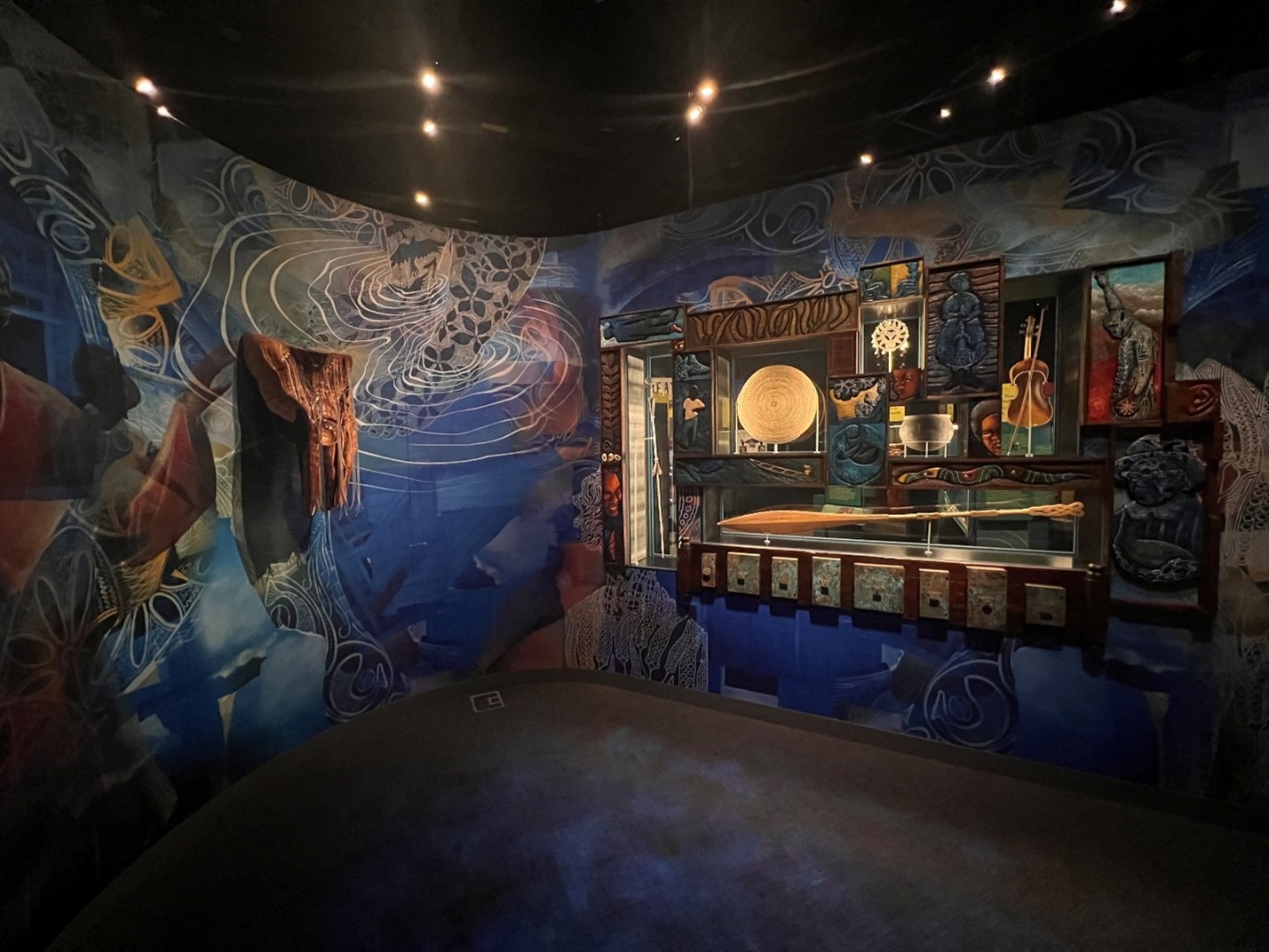
Integrating display cases early in the planning process [supports meeting] the aesthetic, security, conservation, modularity and flexibility expectations of the specific touring exhibition project.
Managing touring complexity: the example of the House of European History exhibition
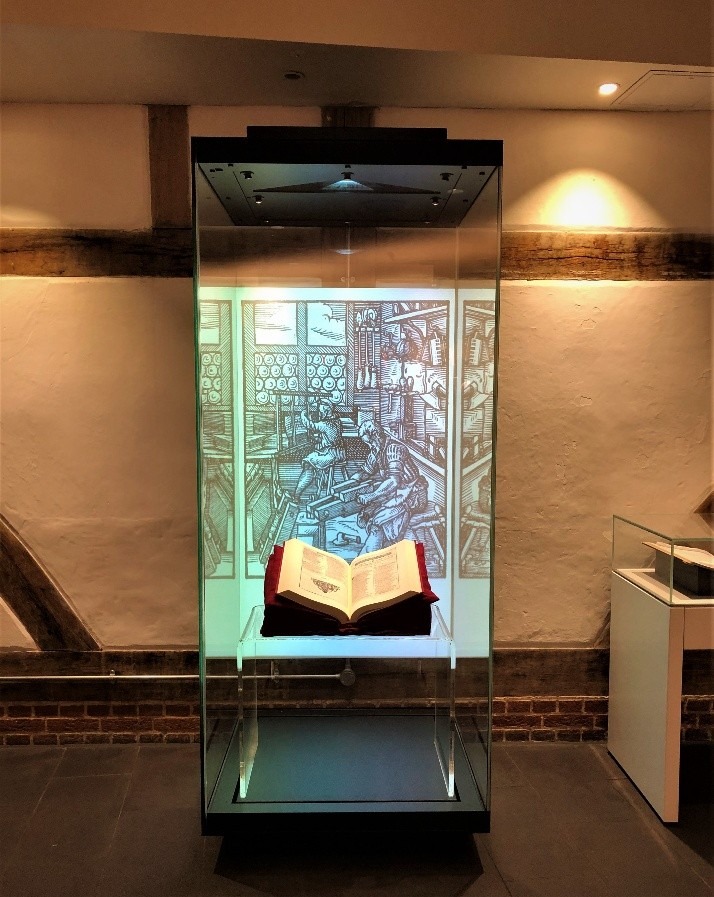
Meyvaert supported the Fake (F)or Real travelling exhibition of the House of European History, which presents falsifications, forgery and deceit throughout history, and displays more than 100 artefacts from the House of European History collection. The team delivered premium, conservation-grade showcases tailored to the specific demands of a touring format. In close collaboration with exhibition design partner Facts and Fiction, they engineered modular display cases that combine flexibility, security and museum-level conservation.
The collaboration with the design partners and exhibition team at the stage of early exhibition design enabled an ideal framework for the creation of robust custom cases designed for touring, which ensured ease of installation, seamless integration and consistent quality for security and conservation, across multiple European venues.
When planning an exhibition intended for international touring, the protection, presentation, and storytelling of valuable objects is attentively taken care of by a team of experienced specialists, brought together by producers and collections team. Display equipment partners play a key role in that framework. It is important to integrate display cases early in the planning process to allow sufficient time for the design and implementation to meet the aesthetic, security, conservation, modularity and flexibility expectations of the specific touring exhibition project and contribute to its success.