Universcience shares insights into the development and touring of About Love, an exhibition presented at six venues across France and Germany since 2020. Designed from the outset to accommodate different perspectives, spaces and cultural contexts, the exhibition has continued to evolve through its collaboration with host institutions, making it a living, travelling project.
A universal subject, treated with precision
For Astrid Aron and Maud Gouy at Universcience, museographers at Universcience and curators of About Love, the initial challenge was to explore a subject that is at once universal and deeply personal. How could an exhibition encompass the many forms love takes, while recognising that each person experiences it differently?
“About Love is not an ‘easy’ exhibition because its theme is popular,” explains Eve Ducroq, Product Lead for Touring Exhibitions at Universcience. “On the contrary, its apparent obviousness demands a great deal of precision.”
That precision began by defining the exhibition’s scope. The curators drew on four Greek terms traditionally associated with different forms of love: éros, desire; storgê, familial love; agapè, selfless love; and philia, friendship. This framework allowed them to explore different kinds of attachment without favouring romantic relationships over other forms of love. “The interest of the exhibition,” says Eve, “is precisely to take a universal subject and show that it is never lived or expressed in a completely universal way.”
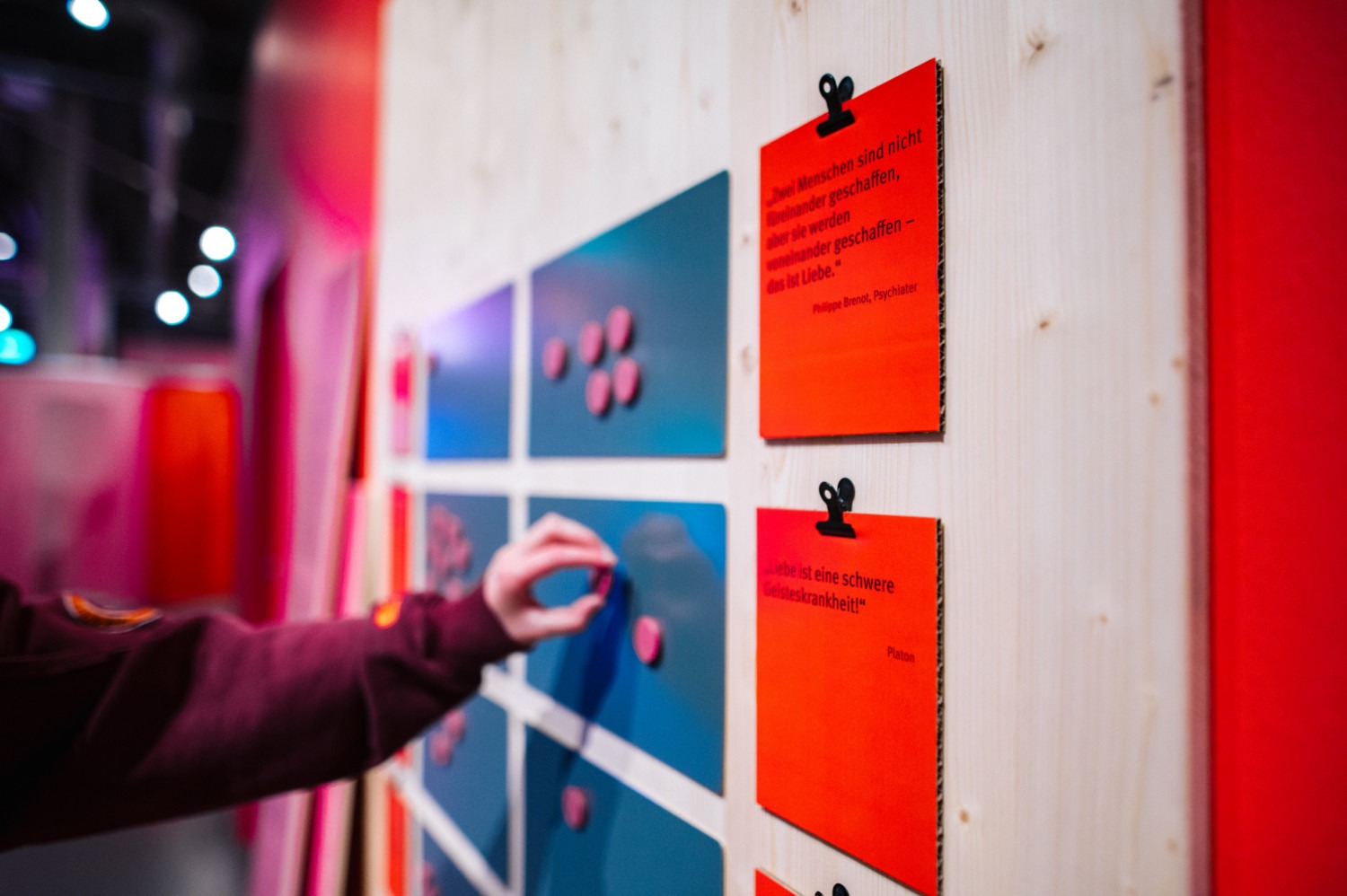
The exhibition resists offering a single definition of love, instead bringing together images, words, sounds and objects from which visitors can form their own associations.
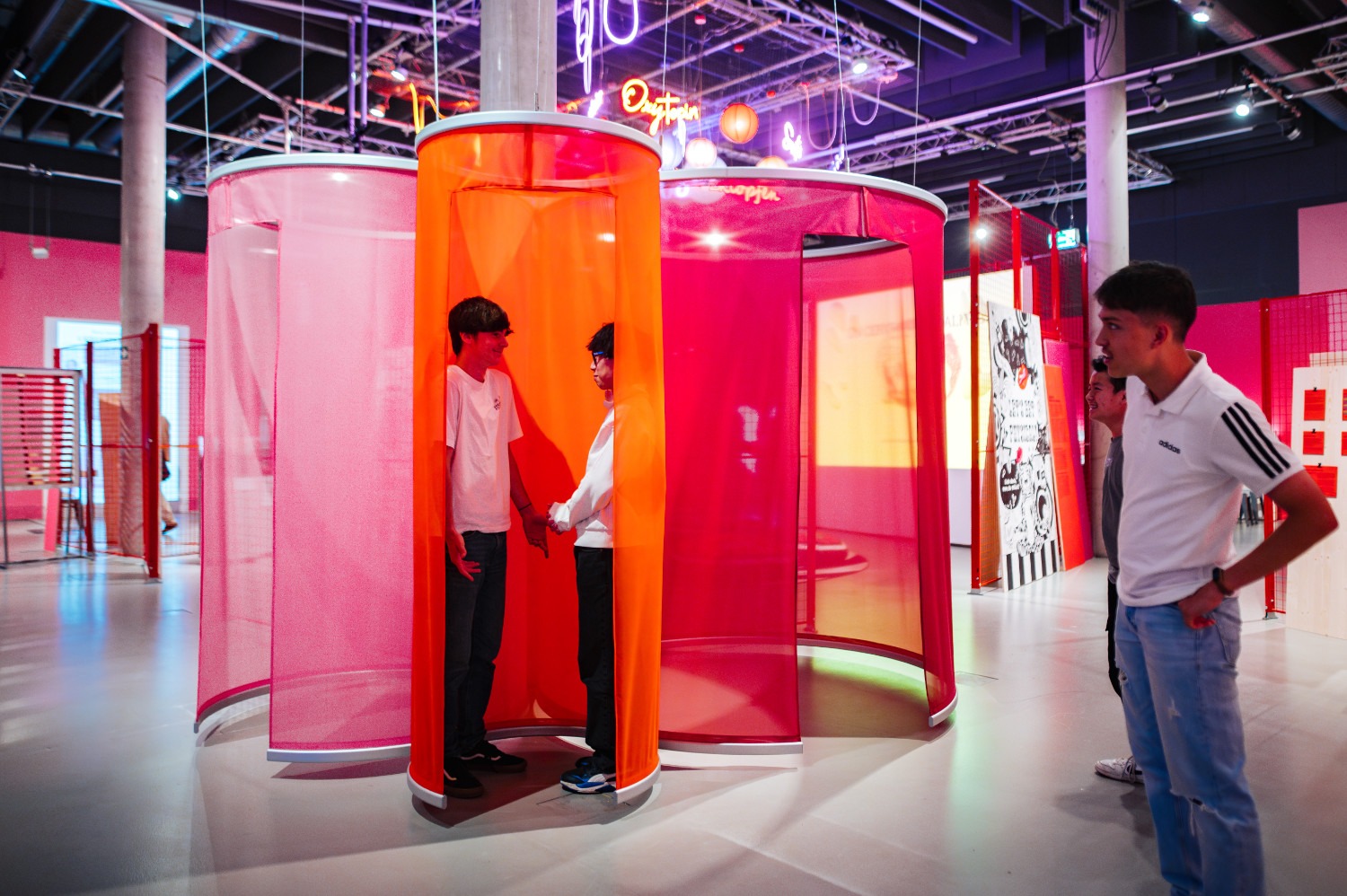
The exhibition resists offering a single definition of love, instead bringing together images, words, sounds and objects from which visitors can form their own associations. Throughout, the curators also sought to represent a diversity of gender identities, sexual orientations, ages and body types, sometimes using symbolic figures that escape categorisation altogether.
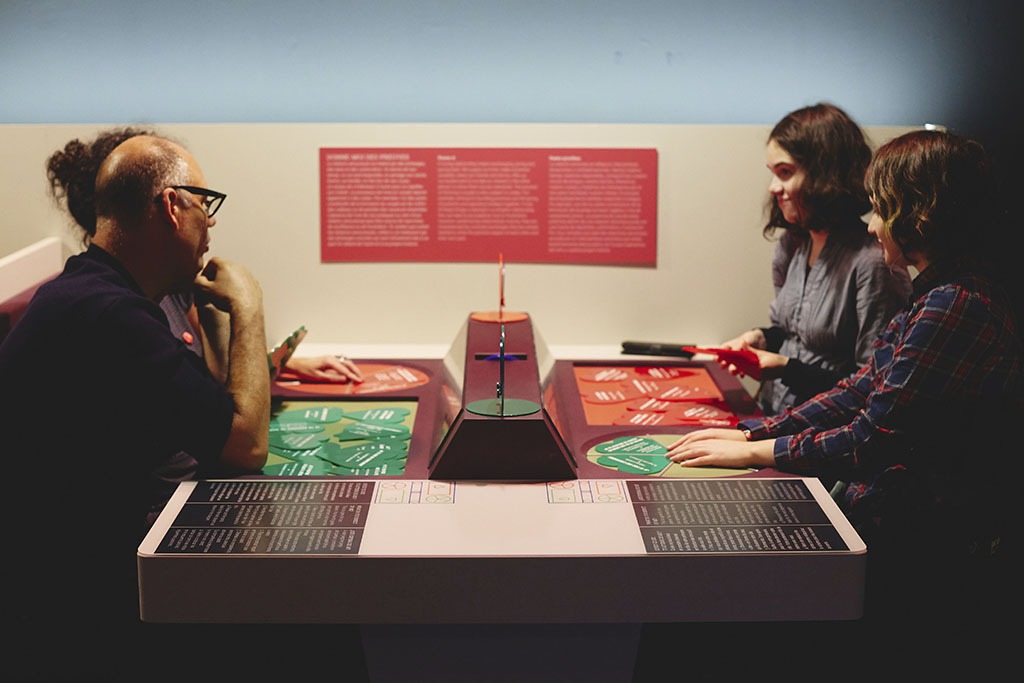
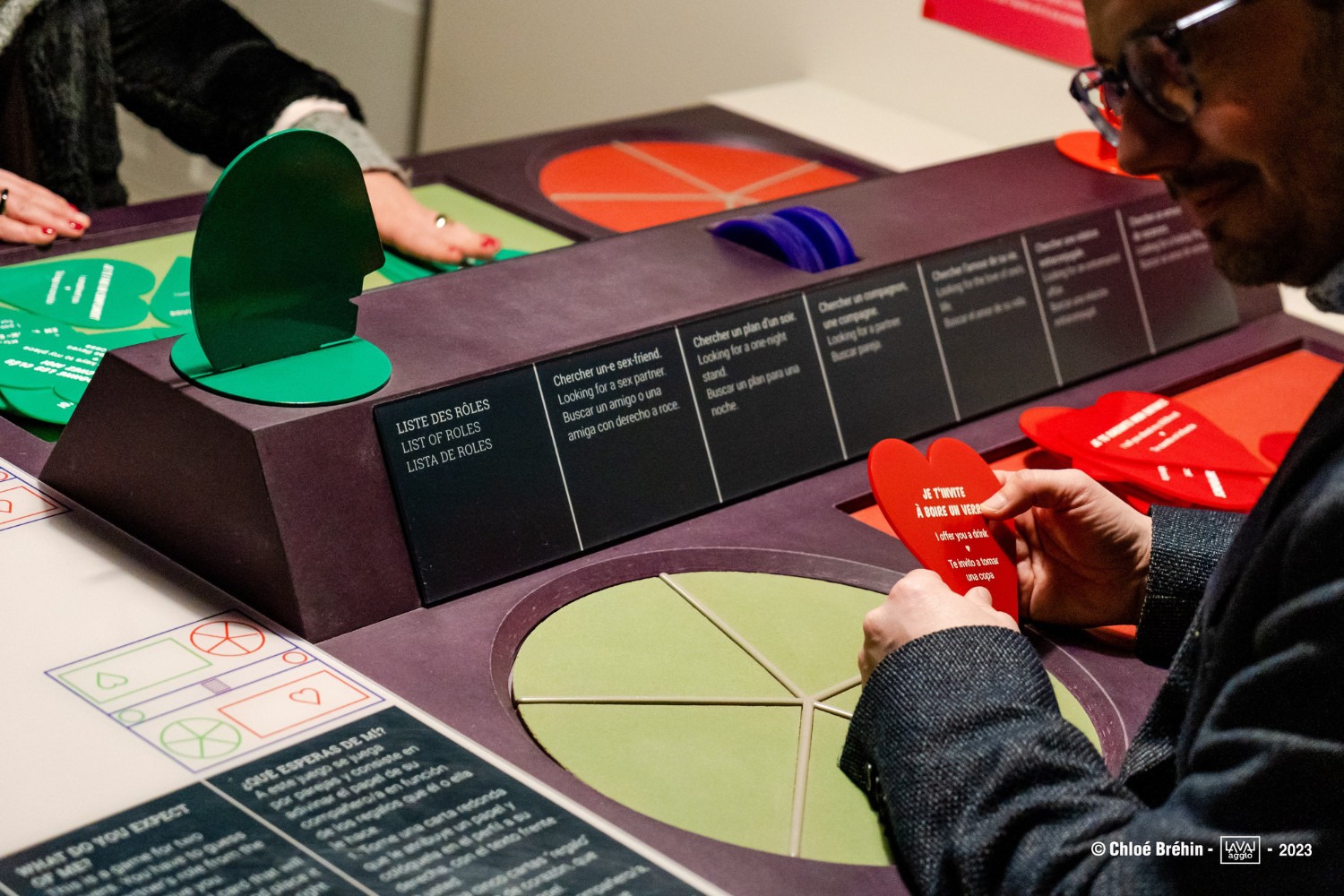
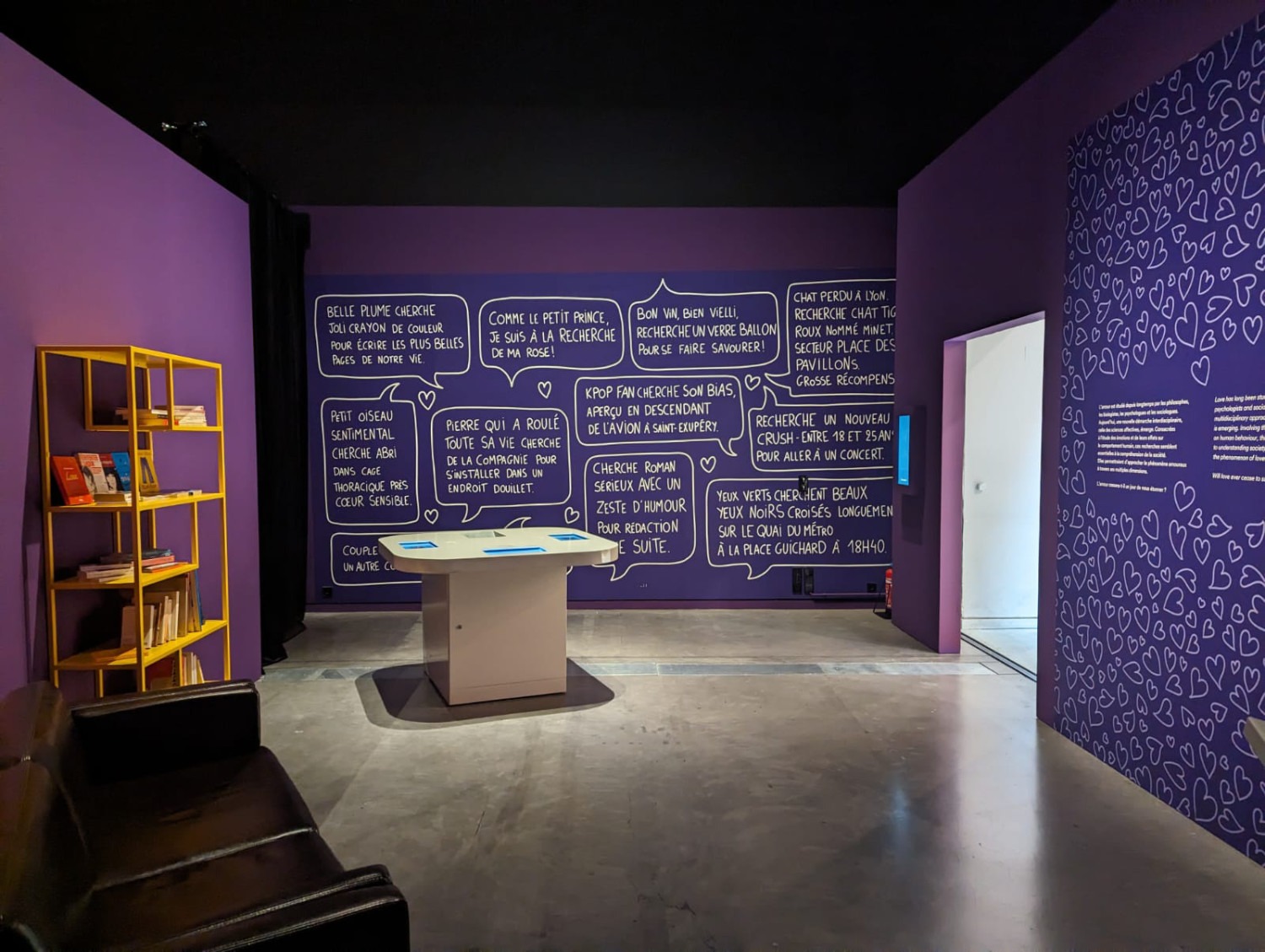
In the Gallery of Attachments, visitors encounter some twenty short scenes drawing on an eclectic range of cultural references, from the love stories of Stendhal and Marivaux to text messages on a mobile phone. A mountain of soft toys, for many a first object of attachment, sits alongside reproductions of works by Watteau, Pierre et Gilles and Man Ray. In an alcove, visitors can listen to tales from China, Ethiopia, Vietnam and Greece. “The scenography gives visitors spaces for projection, listening, play and reflection,” Eve explains.
The second gallery acts as a scientific mirror to the first, returning to the same themes through hormones, attachment theory and brain imaging. Stendhal’s “crystallisation”, which describes the idealisation of the loved one at the beginning of a relationship, is revisited through neuroscience, with brain imaging offering another perspective on the early stages of romantic attraction.
The two galleries approach the same subject from different perspectives, allowing artistic and scientific interpretations to complement and sometimes challenge one another. “The exhibition works because it assumes a double nature,” says Eve. “It is both a science exhibition and a sensory experience, and the scenography plays an essential role in that balance.”
The challenge was to accommodate different cultural and local perspectives while retaining its central identity.
Universal content, local perspectives
While About Love encompasses a diversity of individual experiences, the ways in which love is understood and expressed are inseparable from language, culture, social norms and local context. As Astrid Aron and Maud Gouy developed the exhibition, they noted how “our desires are bound up with the social constructions and stereotypes that surround us […], the product of a collective imagination that varies from one historical period, one culture and one country to the next.”
For an exhibition designed to travel, the challenge was to accommodate different cultural and local perspectives while retaining its central identity. Rather than simply translating the content for each new venue, About Love was designed to allow host institutions to build on the original exhibition through their own collections, expertise and perspectives.
“The exhibition can work on several levels,” Eve explains, “as an autonomous touring exhibition, and as an editorial and museographic framework capable of engaging with the identity of the host institution and local context.”
This flexibility extends to the adaptation of the existing content. Alongside the exhibition’s French, English and Spanish language versions, with further languages possible, subjects such as sexuality, consent, forms of the couple, digital practices, the place of the family and the relationship to the body are reviewed in each new cultural context.
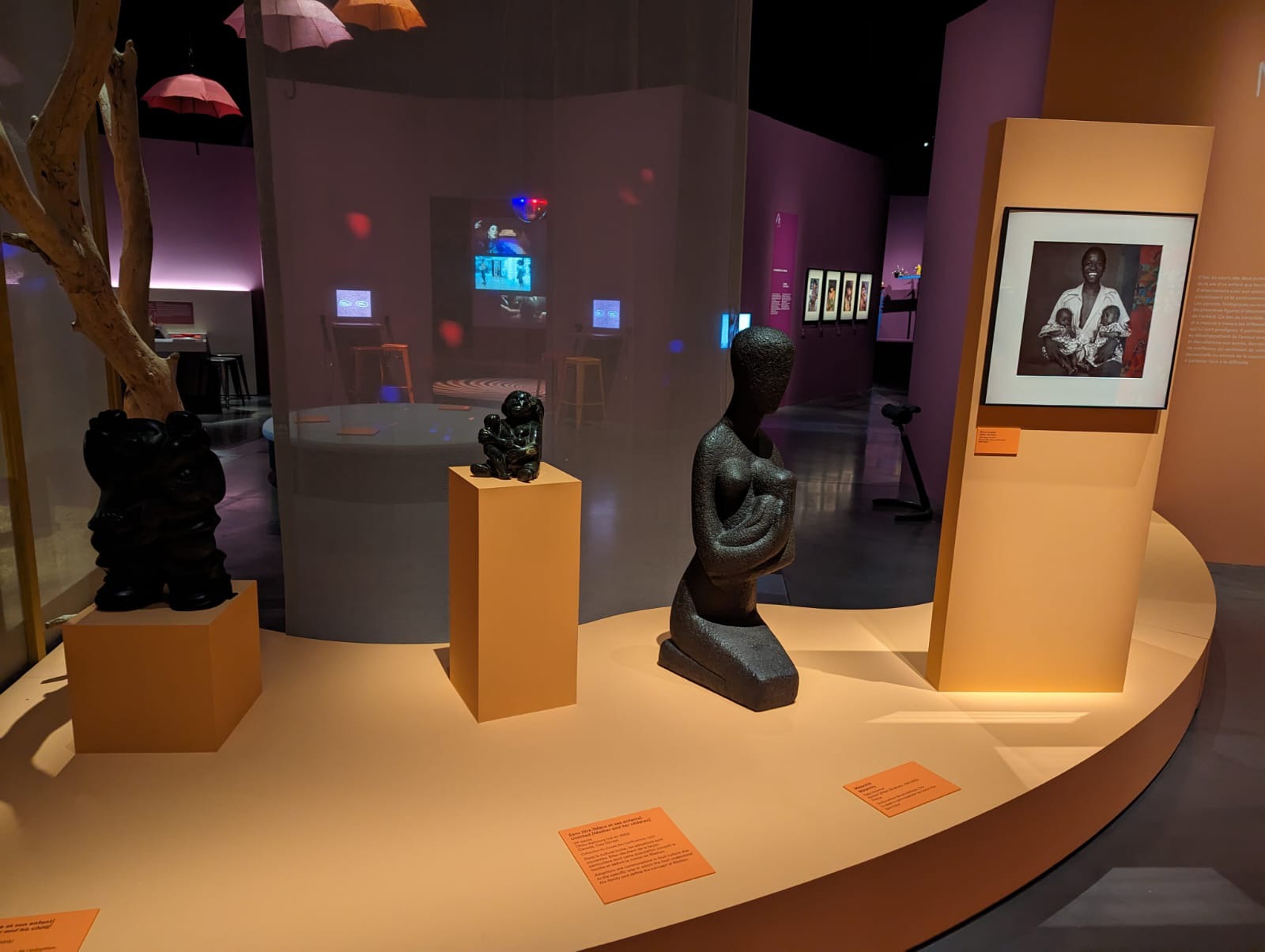
At the Musée des Confluences in Lyon, the exhibition was presented under a new title, À nos amours, and incorporated objects from the museum’s own collections. These allowed the museum to develop two themes already present in the original exhibition: attachment in other animal species and love in non-Western cultures. The section on online dating was also expanded with video testimonies, including older people, bringing additional perspectives to a subject explored in the original exhibition.
The curators remain involved throughout this process, with the support of Eve, from the touring team, who helps preserve the exhibition’s core approach as it adapts and takes new forms.
About Love is organised into a series of autonomous thematic islands that can be rearranged according to the configuration of each host venue.
Designed to travel: the freedom to reconfigure
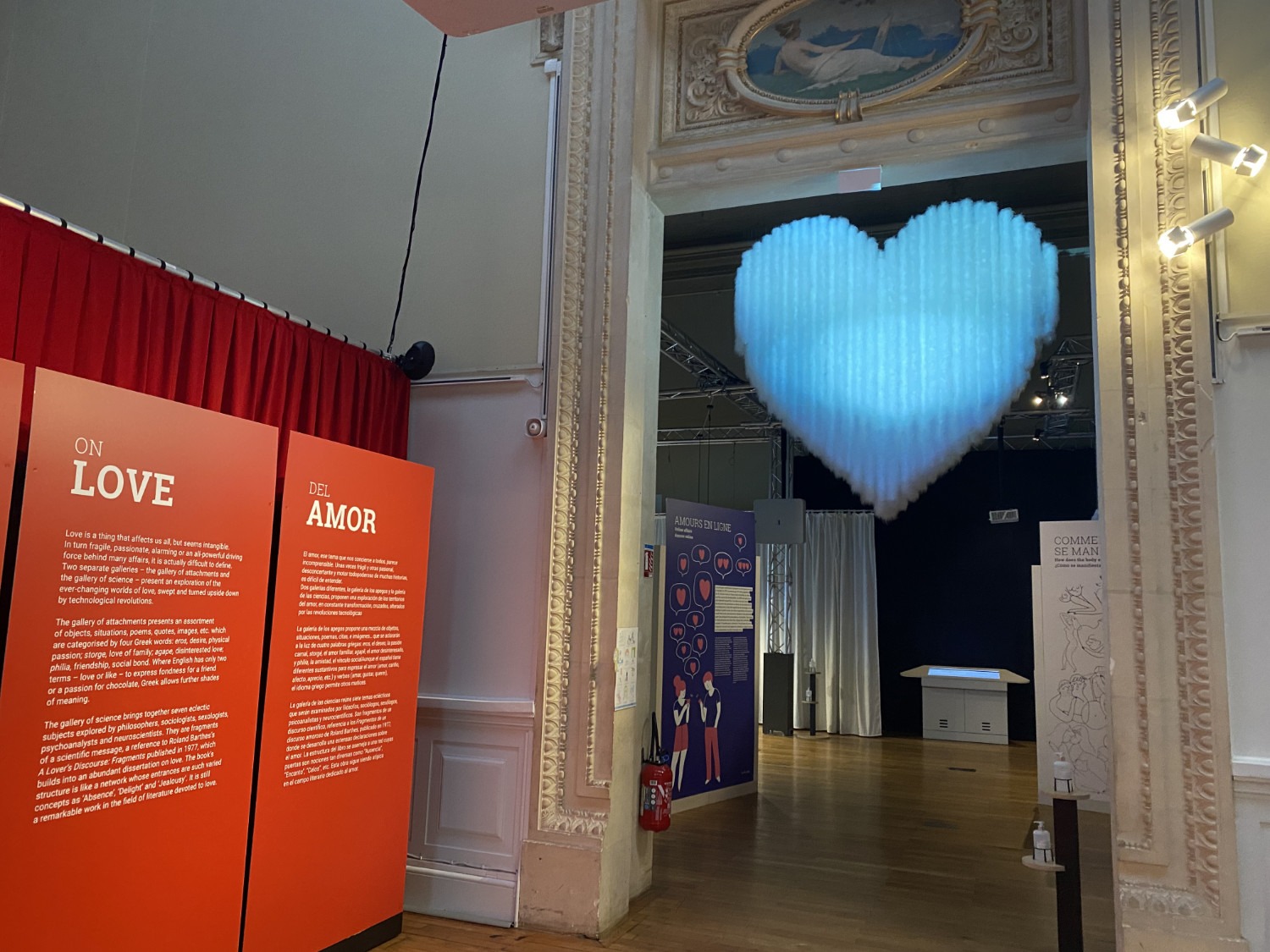
The possibilities for adaptation explored in the exhibition’s content are also built into its physical design. Rather than prescribing a fixed route, About Love is organised into a series of autonomous thematic islands that can be rearranged according to the configuration of each host venue. Each island has its own self-contained content, allowing the exhibition to accommodate different floor areas, ceiling heights, emergency exits and circulation requirements, whether a venue calls for a linear route or a more open configuration.
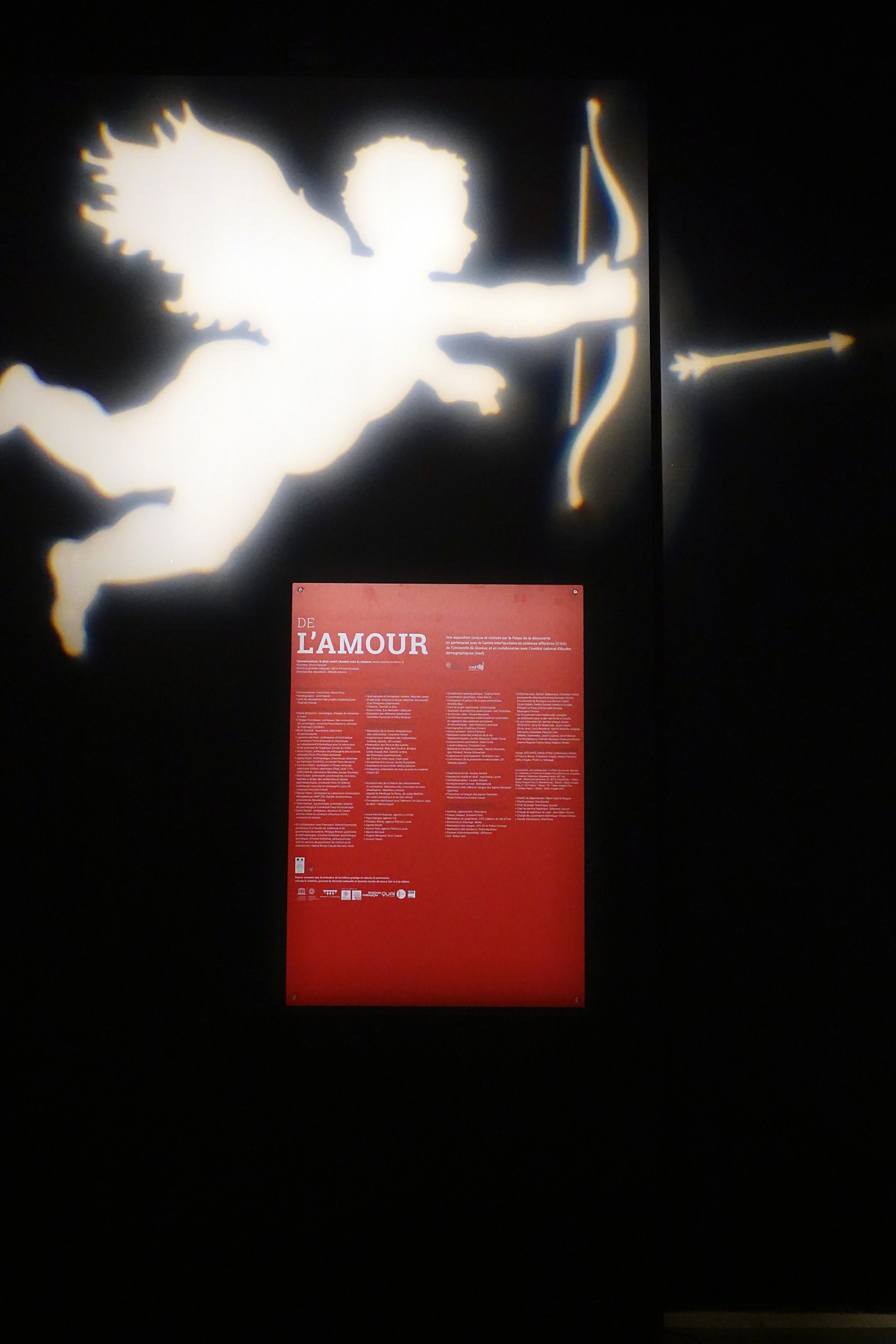
Certain installations determine the initial layout. The suspended heart and its projection, audiovisual spaces and installations requiring a more intimate atmosphere are positioned first. The remaining thematic sequences can then be arranged around them, allowing the exhibition to adapt comfortably to the particular constraints of each venue.
This approach has allowed About Love to travel to five venues beyond Paris, each requiring a different configuration: the Quai des Savoirs in Toulouse, the Pont du Gard in Vers-Pont-du-Gard, the Zoom science centre in Laval, the Musée des Confluences in Lyon and Universum in Bremen, Germany.
The degree of adaptation has varied considerably. At Zoom in Laval, where the available space was more limited, the exhibition route was rearranged to fit the venue. At Universum in Bremen, the team partially rethought the scenography and introduced new interactive devices. At the Musée des Confluences, the changes went further still, with a new scenography and graphic identity developed to accommodate the expanded content and provide a very different sensory experience.
Universcience supports each host throughout the process, from the initial assessment of the venue’s plans, volumes, hanging points and power supply, through to layout simulations and the installation itself. Vincent Dillies, technical coordinator for Universcience’s touring exhibitions team, works alongside each host’s team to adapt the exhibition to the constraints of the venue while preserving its identity and coherence.
Host institutions have been developing their own programmes of activities and partnerships […] extending the themes beyond the gallery space and bringing new perspectives into the visitor experience.
The modular design provides a common foundation, but does not prescribe an identical presentation at every venue. Each host has the option of working within the existing configuration or taking the adaptation further, drawing on its own resources and expertise. “With each new host, the exhibition continues to evolve according to the context in which it is presented,” says Eve.
Beyond the visit: the exhibition as a springboard
Beyond adapting the exhibition itself, host institutions have been developing their own programmes of activities and partnerships, often very creatively, extending the themes beyond the gallery space and bringing new perspectives into the visitor experience. “Cultural programming is a wonderful area of engagement, and one that can be particularly well leveraged with this subject and this exhibition,” says Eve, “whether through conferences, debates, workshops for specific age groups and themed evenings, or through mediation on topics such as consent, attachment, online dating and love across cultures.“
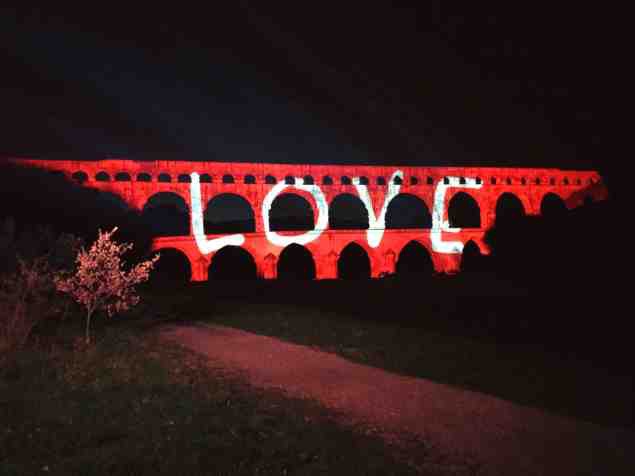
At the Pont du Gard site, for example, the exhibition inspired a walking performance that explored love through literature and the history of the site. Visitors followed a route through the monument, accompanied by actors and a saxophonist, discovering texts by writers who had been moved by the Pont du Gard, among them Rabelais, Dumas and Rousseau. It proved a particularly engaging experience for visitors.
Such programming allows each host to build on the exhibition’s themes through its own expertise and local partnerships, whether with artists, associations or scientists. “The know-how is not just renting out an exhibition that already exists,” Eve explains. “It is supporting a host venue so that the exhibition can come to life in a new, unique context, with its own constraints and its own audiences.“
A balance between the exhibition’s core identity and its adaptation
Over the course of its European tour, About Love has continued to develop through its encounters with different institutions, each bringing new perspectives and expertise to the exhibition. Its clear curatorial direction, flexible design and the support of Universcience form a framework that allows each adaptation to be made with great care for the exhibition’s core identity.
By embracing the multiplicity of the subject without imposing a single interpretation, the curators created an exhibition open to new collections, testimonies and points of view. “The tour so far has shown that the exhibition is solid enough to remain recognisable, and open enough to be reinterpreted,” says Eve.
Across six venues in France and Germany, more than 790,000 people have now seen About Love. In Paris, visitors used the comments book to leave declarations of love, some addressed to a partner or a friend, some to the exhibition itself, and some to humanity at large.
About Love will be available for touring from spring 2027. Institutions interested in hosting the exhibition can contact Universcience for further information.